
Introduction
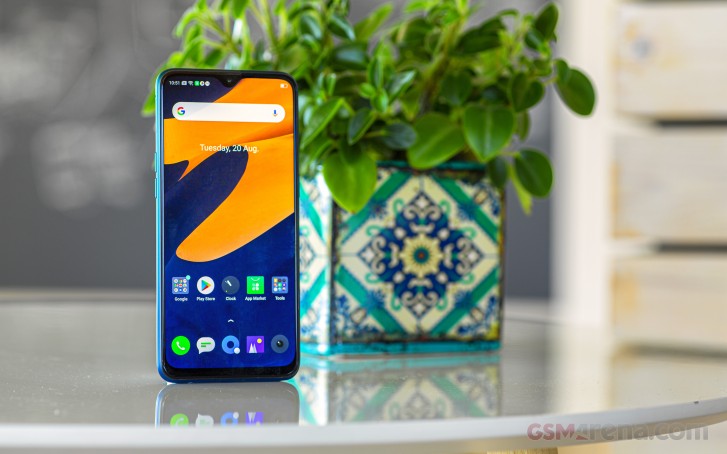
Ah, the Realme 5 Pro. It's been what - five years? Three? Actually, it's been only one year and yet Realme is launching its fifth generation of smartphones. The maker has been trying to cater to users' every imaginable need and quite successfully at that. So, after the Realme X that brought us immersive AMOLED experience, let's meet the camera-centric Realme 5 Pro.
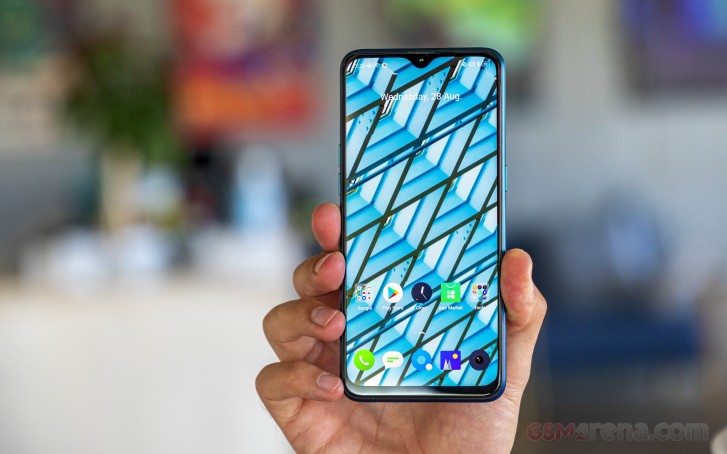
It might have been just over a year, but we are glad Realme has found its MO - catchy designs, breezy performance, and good camera skillset. And it's been delivering those on unbelievably low prices ever since. The Realme 5 Pro doesn't lose focus on what's important either - there is the signature dazzling looks, the upper-tier Snapdragon 712 chip, and company's first quad-camera setup.
Indeed, Realme has jumped from dual- straight to quad-camera arrangements. And the Realme 5 Pro setup is rather impressive with a 48MP primary, an 8MP ultrawide, a 2MP macro, and 2MP portrait snappers. Advanced 2x digital zoom is available thanks to the high-res primary, as well as Nightscape and Chroma boost modes.
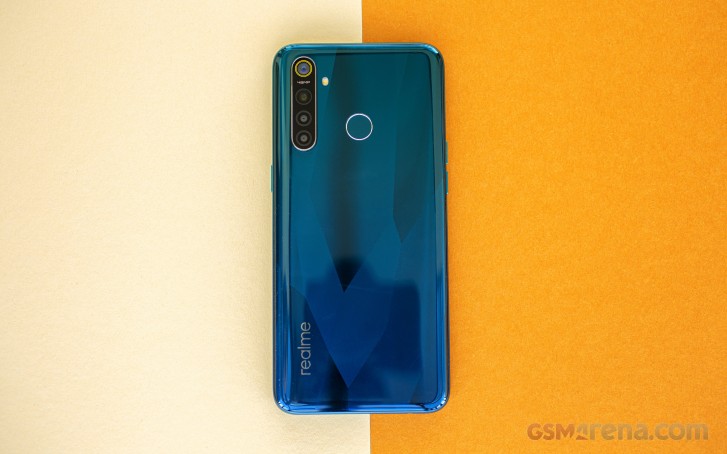
Another thing the Realme 5 Pro impresses with is the large battery and the presence of 20W VOOC charging via the USB-C port.
And last, but of huge importance, is the fact that the Realme 5 Pro is the company's first-ever splash-resistant phone.
Realme 5 Pro specs
- Body: Gorilla Glass 3+ front, polycarbonate back, splash-proof
- Screen: 6.3-inch IPS LCD, 19:9, 1080p+, 409ppi
- Rear camera: Primary 48MP Quad Bayer 1/2" sensor, f/1.8 lens; 119° ultra wide-angle 8MP camera; 2MP macro camera; 2MP depth sensor; LED flash; 2160p@30fps video recording, EIS
- Front camera: 16MP Quad Bayer sensor, f/2.0 lens; EIS
- Chipset: Snapdragon 712: octa-core CPU (2x2.2 GHz Kryo 360 Gold & 6x1.7 GHz Kryo 360 Silver), Adreno 616 GPU
- Memory: 4/64GB, 6/64GB or 8/128GB; UFS 2.1 storage; dedicated microSD slot for up to 256GB expansion
- OS: Android 9.0; Color OS 6.0 on top
- Battery: 4,035mAh, 20W VOOC 3.0 charging
- Connectivity: Dual SIM (4G), Bluetooth 5.0, Wi-Fi a/b/g/n, USB-C
- Colors: Crystal Green, Crystal Blue
- Misc: Rear-mounted fingerprint reader
Realme 5 Pro isn't a significant update over the Realme 3 Pro as far as screen and performance are concerned. In fact - those stay the same. But the camera seems light years ahead and may as well make people that bought the Realme 3 jump to 5 in no time. How things will turn out? Let's find out!
Unboxing the Realme 5 Pro
The Realme 5 Pro comes packed into a rather bulky paper box but it's full of goodies. The maker ships the phone with the 20W VOOC charger and the proprietary USB-C cable needed for the VOOC to work properly.
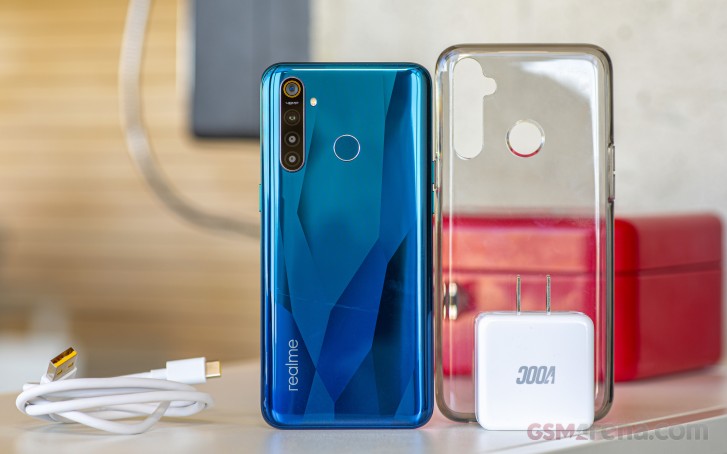
The bundle also contains a semi-transparent gray silicone case that will help keep the beauty of the Realme 5 Pro unspoiled for quite a while.
Design
A handful of people probably remember this, but Oppo came up with the triangular-patterned design back in 2015 on the R1x. But it was a once and done deal, that is until last year Realme brought this sweet geometric pattern back for the Realme 1 and apparently it intends to keep it alive with the Realme 5 series.
 The Realme 5 series
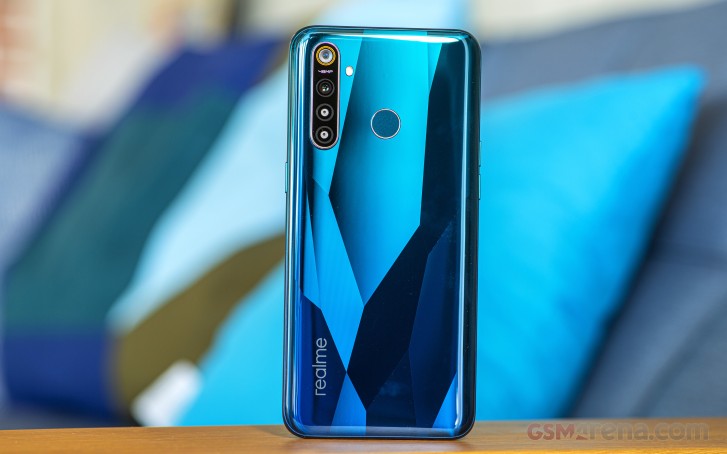
Indeed, the Realme 5 Pro, no matter the base color, has captivating looks and we lost a few moments just staring at it. Light reflects differently through the different shapes on the back and the color changes towards darker or lighter depending on the viewing angle. It's nothing over the top, but enough to win more than a few looks of approval.

We can't confirm the material used for making this stunning rear panel. Maybe it's glass, maybe (and probably) it's plastic. But the feeling we got while handling the Realme 5 Pro was definitely glass-like, meaning the back did not feel cheap at all.



Realme 5 Pro
The Realme 5 Pro may have mesmerizing looks, but its design is as trivial as it gets today - the front is all-screen protected by a Gorilla Glass 3, and the back is all a piece of art with a multi-camera setup. The frame that combines those two together is done in the same base color as the back but with a matte finish. It is rather thin and this you can definitely tell that this one is made of plastic.
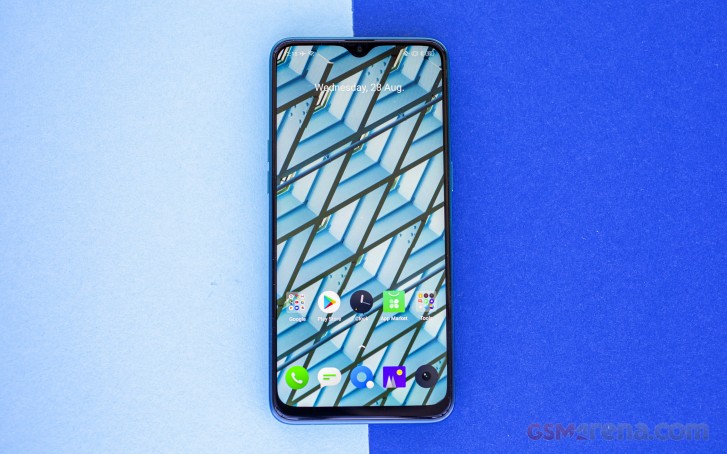
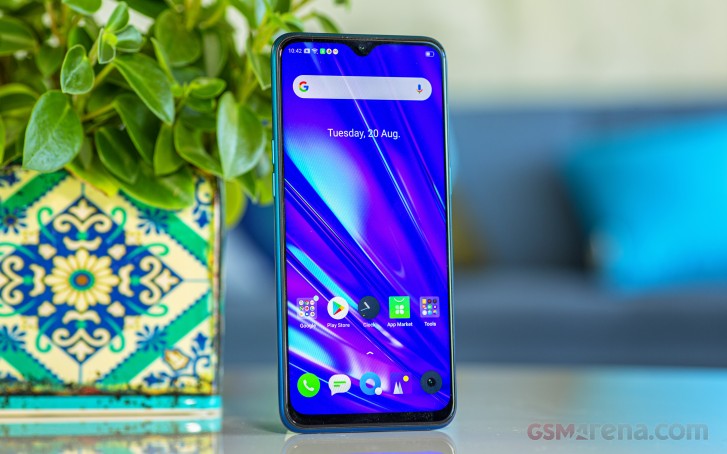
So, the large 6.3" IPS LCD screen at the front is your doorway to the Android world and beyond on the Realme 5 Pro. The panel has a droplet-like cutout for the 16MP selfie snapper. Hidden within the notch are also the ambient light and proximity sensors.
Realme claims it has managed to reduce the size of the notch by 30% since the Realme 3 Pro, but we really can't see the difference.
The earpiece grille is just above the notch, etched within the screen's enclosure, but it's so thin that it's almost invisible.
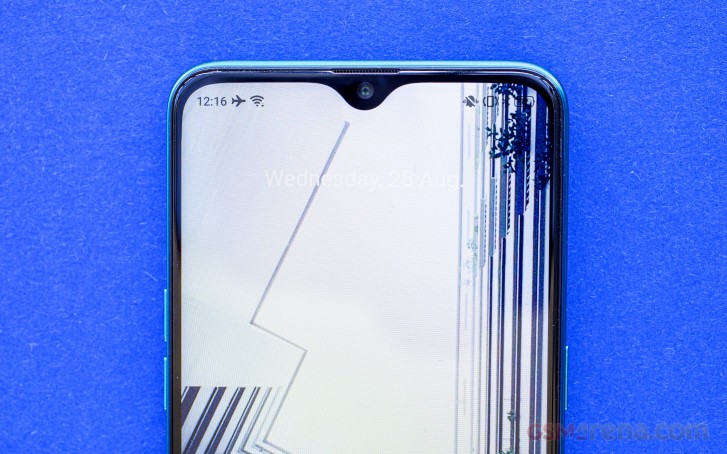
There is no notification LED on the Realme 5 Pro.
There is a lot going on around the sides of the Realme 5 Pro, though most of the necessities are placed at the bottom of the phone - the USB-C port, the 3.5mm jack, and the loudspeaker grille.



Realme 5 Pro
There is a triple-card slot on the left for accommodating two nano-SIMs and one microSD card slot - no need to swap anything. The volume buttons are on also on the left side and while that's a bit odd, it's not uncommon. Finally, the power key is on the right side.
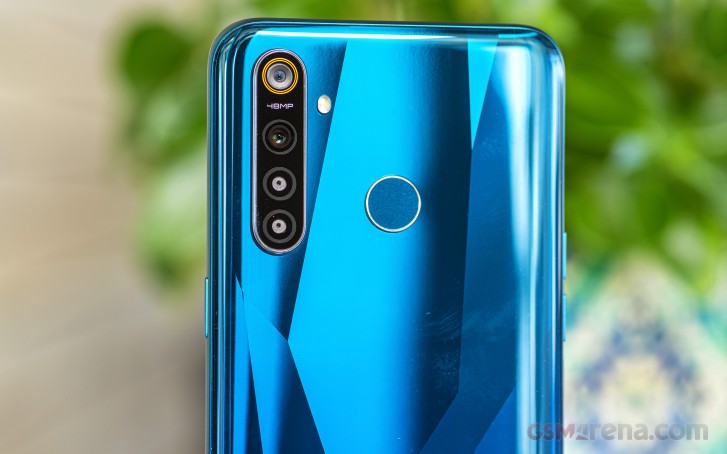
The back of the Realme 5 Pro is indeed interesting. Once you are done looking at those nice pointy shapes, you are bound to notice the quad-camera setup that's humping quite a bit. Starting top to bottom the first camera is the 8MP ultrawide shooter followed by the 48MP primary, then comes the 2MP depth sensor and the last one is the 2MP macro camera.
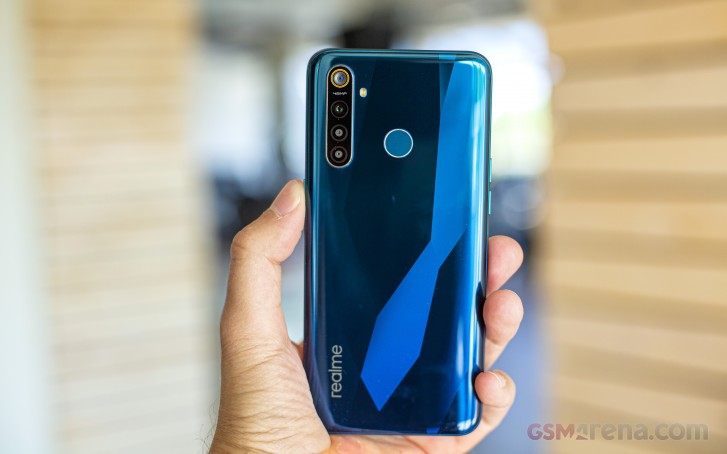
Realme didn't think the camera decorations through - the yellow halos around the first snapper and the 48MP inscription suggests that the primary camera comes first when it is actually the second. But let's not be that picky, we guess.
All four cameras share the same bump and because of it, the Realme 5 Pro will wobble when rested on a desk or a table. This is the price you pay when the makers try to fit so many snappers in such a slim body.
Also on the back is the fingerprint reader. It's a very traditional placement and the sensor is always-on, as usual, accurate and plenty fast.
Here is something we didn't expect to see soon on a Realme specs sheet - the series 5 phones are splash resistant. How about that?!
The maker has sealed all gaps between the frame and the panels, the ports, the speaker and the earpiece, the SIM tray, and even the keys. It used a combination of glue, rubber gasket and rings to secure everything. And this is all very welcome, especially for a smartphone that cheap!

Price is probably why Realme didn't go for the IP68 certification. This might have led to a hike in the retail price. Or maybe Realme isn't that confident it will pass the IP68 or similar. That's why we suggest not to enter the pool with your Realme 5 Pro, but you can be sure the phone will survive any accidental spills, drops in sweet water, or a just rainy day. So, while you won't go swimming with the Realme 5 Pro, you can at least have greater peace of mind.
The Realme 5 Pro measures 157 x 74.2 x 8.9 mm and weighs 184 g - that's the same as the Realme 3 Pro but 12g heavier.
Because of the thin frame and the sloping edges of the rear panel, the Realme 5 Pro is a tough one to hold and handle, especially when snapping pictures. That's why we strongly recommend using the provided soft case.
Smudges do stick on both ends of the Realme 5 Pro, but they are mostly unnoticeable on the back. The screen would require regular cleaning though, mostly when those reflect the bright sunlight on any good day.
A familiar 6.3" display
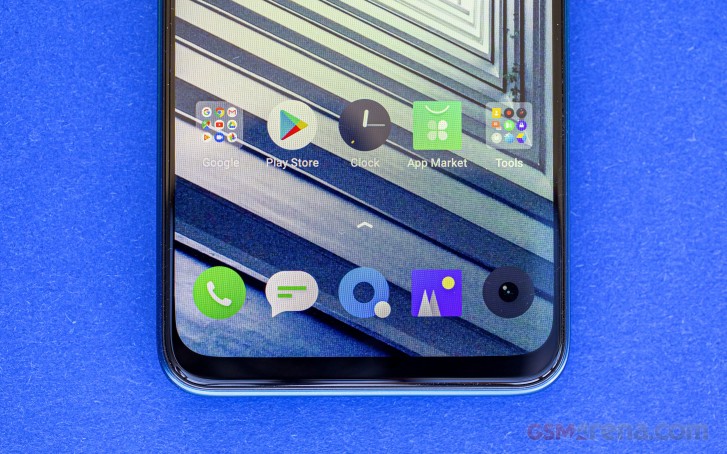
The Realme 5 Pro packs a 6.3" IPS LCD screen with a droplet-shaped notch for the selfie camera. And if we are not mistaken - that should be the same panel we saw on the Realme 3 Pro four months ago.
The screen resolution is 1,080 x 2,340 pixels making for a 19.5:9 aspect ratio and 409ppi density.
Realme promises a maximum brightness of 450 nits but the screen exceeded the maker's specs as we measured 512nits at the far-right end of the brightest scrubber. And thanks to the deep black levels the screen's contrast turned out to be excellent with a ratio of 1875:1.
There is no Auto brightness boost under direct sunlight, but the screen does well even in the brightest of days thanks to the high brightness and average reflectivity. That is if the glass is not smudged up. If it is, then you just wipe it clean and you are good to go.
We also measured the minimum brightness for those of you keeping track of this test and it's just 2.1 nits.
| Display test | 100% brightness | ||
| Black, cd/m2 | White, cd/m2 | ||
| 0.273 | 512 | 1875 | |
| 0 | 448 | ∞ | |
| 0.285 | 508 | 1782 | |
| 0.358 | 479 | 1338 | |
| 0 | 449 | ∞ | |
| 0 | 646 | ∞ | |
| 0.39 | 480 | 1231 | |
| 0.413 | 501 | 1213 | |
| 0.315 | 493 | 1565 | |
| 0 | 437 | ∞ | |
| 0 | 641 | ∞ | |
| 0 | 444 | ∞ | |
| 0 | 637 | ∞ | |
The color reproduction is decent out of the box with lively though not super accurate colors. We measured an average deltaE of 5.5 and a maximum deviation of 9 at point Blue. Indeed, the white and gray hues visibly shifted towards blue in the default display setting.
There is a Color Temperature Adjustment slider in Display Settings that is set to the 'Default' middle position with 'Cooler' and 'Warmer' at the extremes. Setting this slider to the warmest option yields better results - average deltaE of 3.7 and a maximum of 6.7. If you are all about accuracy, this is the place to go.
Battery life
The Realme 5 Pro has the same 4,045mAh battery that powered the Realme 3 Pro. The phone supports VOOC 3.0 fast charging and its box contains both the 20W charger and the proprietary USB-C cable needed for VOOC to work. This pair refills 50% of the Realme 5 Pro's depleted battery in 30 mins, while a full charge takes about 80-90 mins.
In out testing, the Realme 5 Pro clocked almost 14 hours of video playback and north of 16 hours of browsing the web over Wi-Fi. We also measured more a day of 3G voice calls. And adding the efficient standby performance we got an excellent overall Endurance rating of 100 hours.
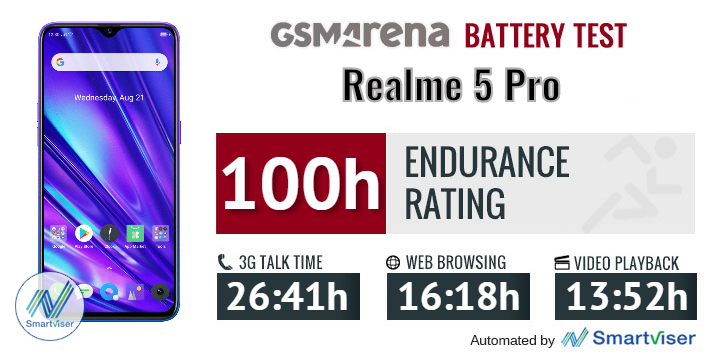
Our battery tests were automated thanks to SmartViser, using its viSerDevice app. The endurance rating above denotes how long a single battery charge will last you if you use the Realme 5 Pro for an hour each of telephony, web browsing, and video playback daily. We've established this usage pattern so that our battery results are comparable across devices in the most common day-to-day tasks. The battery testing procedure is described in detail in case you're interested in the nitty-gritty. You can check out our complete battery test table, where you can see how all of the smartphones we've tested will compare under your own typical use.
Speaker
The Realme 5 Pro has a single bottom-firing speaker that scored a Very Good mark in our loudness test. The speaker was tuned for mid-tones and when playing the music you'll hear the vocals crystal clear, but the music itself will be a little bit on the quieter side.
| Speakerphone test | Voice, dB | Ringing |
Overall score | |
| 65.9 | 66.6 | 68.4 | Below Average | |
| 65.6 | 66.2 | 70.4 | Average | |
| 67.9 | 73.5 | 80.4 | Very Good | |
| 66.3 | 72.9 | 85.8 | Very Good | |
| 70.6 | 74.8 | 81.2 | Very Good | |
| 70.2 | 71.9 | 84.6 | Very Good | |
| 71.5 | 73.8 | 83.1 | Excellent | |
| 67.5 | 73.8 | 90.5 | Excellent | |
| 69.8 | 71.5 | 90.5 | Excellent | |
| 86.2 | 79.0 | 87.0 | Excellent |
Audio quality
The Realme 5 Pro did marginally better than the vanilla 5 in our audio quality test. Its loudness was again exemplary with an external amplifier, but while headphones dropped the 5 to average, the Pro took a smaller hit and remain pleasingly loud.
The clarity is as good as you can expect in the first case, while headphone damaged stereo separation, frequency response and caused some intermodulation distortion. Each of those was affected to a lesser degree compared to the vanilla 5 though, so the overall result was a degree better. Still the Realme 5 Pro is a phone for the casual music fan than the avid audiophile.
| Test | Frequency response | Noise level | Dynamic range | THD | IMD + Noise | Stereo crosstalk |
| +0.03, -0.05 | -93.3 | 93.0 | 0.0019 | 0.0073 | -92.0 | |
| +0.16, -0.39 | -92.0 | 91.9 | 0.009 | 0.344 | -50.6 | |
| +0.03, -0.01 | -93.4 | 93.3 | 0.0018 | 0.0072 | -88.1 | |
| +0.40, -0.27 | -92.5 | 92.5 | 0.010 | 0.407 | -49.8 | |
| +0.06, -0.07 | -92.9 | 92.8 | 0.0010 | 0.0075 | -93.3 | |
| +0.38, -0.28 | -90.7 | 90.3 | 0.0077 | 0.391 | -50.7 | |
| +0.03, -0.04 | -92.9 | 92.7 | 0.0018 | 0.0078 | -91.1 | |
| +0.40, -0.27 | -92.7 | 92.5 | 0.011 | 0.411 | -50.2 | |
| +0.02, -0.01 | -93.7 | 90.7 | 0.0015 | 0.0098 | -93.0 | |
| +0.53, -0.22 | -90.6 | 88.8 | 0.0048 | 0.302 | -50.8 | |
| +0.02, -0.02 | -90.5 | 90.4 | 0.0050 | 0.015 | -91.7 | |
| +0.17, -0.25 | -90.8 | 91.0 | 0.087 | 0.256 | -58.9 | |
| +0.07, -0.01 | -90.0 | 90.1 | 0.0019 | 0.015 | -92.9 | |
| +0.16, -0.10 | -92.3 | 92.5 | 0.0069 | 0.164 | -64.8 |
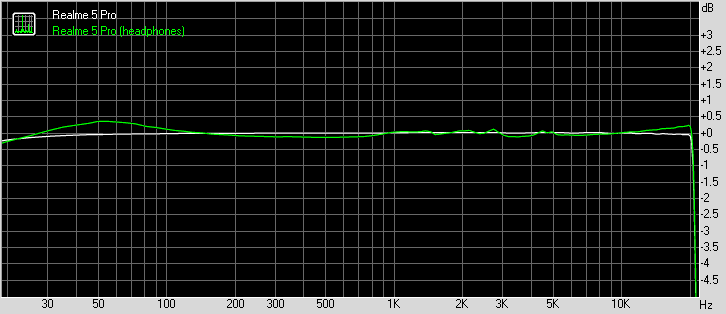
Realme 5 Pro frequency response
You can learn more about the tested parameters and the whole testing process here.
Color OS 6 on top of sweet Pie
The Realme 5 Pro runs Oppo's latest Color OS 6 over Android 9.0 - a combo we've already seen on the Realme X, 3 and 3 Pro. Some icons might have changed along the way, but other than that - it's the same UI we left on the previous model.
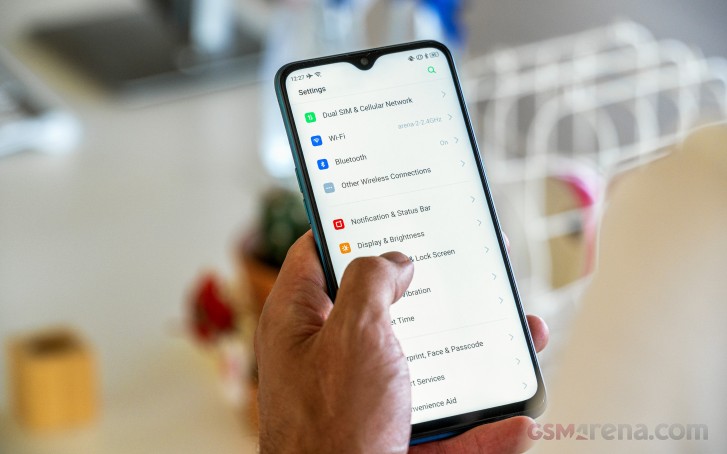
Color OS 6 generally revolves around a light color scheme with the settings menu using a white backdrop with light color accents and gradients.
Registering a fingerprint takes a few steps, but it's not a big deal to spend some time enrolling a print as long as it works well later on. And it does flawlessly on the 5 Pro. The sensor is always on and upon recognition unlocks the phone in a flash.
You can also set up face unlock in addition to or instead of fingerprint security. But it's far inferior to the fingerprints in terms of security. There's an option that you can set to require your eyes to be open for the phone to unlock to add some extra security, but it still won't match the fingerprint sensor security-wise.





Biometric security
The user interface of the Realme 5 Pro is virtually identical to that of the X, in turn very similar to the pre-Pie releases from the brand. There are the usual homscreens, Smart Assistant optional pane that is more like a widget page, there is also an app drawer.





Lockscreen • Homescreen • Folder view • Widget pane • App drawer • App drawer
The drop-down shade features notifications, quick toggles, and a brightness scrubber and has been redesigned for Color OS 6. The task switcher is reminiscent of Apple's, though it has an End All button. Split-screen multitasking is available for all compatible apps, and you can resize the windows and swap the two apps.





Notifications • Toggles • Task Switcher • Split screen
There are all sorts of navigation options on the Realme 5 Pro. There's the old-school nav bar on the bottom, swipe up gestures that replace it, but don't really change the dynamic much, and then there's the 'Swipe Gestures from Both Sides' option (the default one). This last one is our favorite - it mimics partially the iOS way of doing things (you swipe from the sides for Back) which we've seen one way or the other on EMUI and MIUI, but that's not why we like it. It adds a welcome twist - swipe in from the side and hold to switch between the two latest apps - how brilliant is that?




Navigation settings
Of course, the usual set of tools comes pre-installed. There is a Phone Manager for handling memory cleaner functions, app permissions and encryption, and virus scanning, among other things.
Then there's Game Space which allows you to handpick which notifications to pass through when you are playing games and you don't want to be interrupted. There are also different performance modes and an option to lock the brightness only for certain games.



Game Space
Realme also provides basic multimedia apps - a gallery called Photos, and a Music player. A file manager is also part of the package, FM radio support and app are available, too.






Phone Manager • Gallery • Music • Files • Compass • FM radio
Performance and benchmarks
The Realme 5 Pro runs on the Snapdragon 712 chipset - essentially a 710 with minor tweaks such as 0.1GHz higher potential clock speed on the high-performance cores. Those would be Cortex-A75-based Kryo 360-branded cores, two of them, ticking at up to 2.3GHz. The other six cores are Cortex-A55 derivatives, clocked at up to 1.7GHz. There's been no upgrade to the GPU for the 710-to-712 transition, and it's still the Adreno 616.
Realme promises the Snapdragon 712 chipset 10% boost over the S710-powered Realme 3 Pro and X. The company is keen to point out that this chipset has the same ISP as the Snapdragon 845 and the AI engine is twice as fast as the one on the 710.
Realme placed a copper foil, a graphite sheet, and aluminum to lead the heat away from the chipset.
The Realme 5 Pro is available in three memory configurations - 4/64GB, 6/64GB and 8/128GB. It is only the company's second phone to use UFS 2.1 storage. That's much faster than eMMC and should speed up the load times for apps and games. If you need more storage, the dedicated microSD slot can add up to 256GB more.
We should mention that Realme 5 Pro limits the CPU and GPU performance when not running on High Performance Mode. You must opt for this mode from the Battery Settings if you want to unlock the full potential of the chipset, otherwise you will lose between 10% and 20% of the overall performance. Naturally, we ran the benchmarks in Performance mode.
First, we ran GeekBench and it showed minor jump from the Realme 3 Pro and X numbers, while scored on par with the Mi 9 SE - a phone with the same Snapdragon 712 chip.
GeekBench 4.1 (multi-core)
Higher is better
- Xiaomi Mi 9T
6863 - Xiaomi Redmi Note 7 Pro
6620 - Realme 5 Pro
6106 - Xiaomi Mi 9 SE
6017 - Realme X
5915 - Realme 3 Pro
5881 - Huawei P30 Lite (perf. mode)
5549 - Realme 5
5493 - Xiaomi Redmi Note 7
5411 - Samsung Galaxy A50
5396 - Realme 3
4936 - Motorola Moto G7
4755 - Samsung Galaxy M30
4188
In the single-core test the Realme 5 Pro scored noticeably higher than the Realme 3 Pro and Realme X despite having quite the same CPU cores.
GeekBench 4.1 (single-core)
Higher is better
- Xiaomi Mi 9T
2537 - Xiaomi Redmi Note 7 Pro
2404 - Realme 5 Pro
1913 - Xiaomi Mi 9 SE
1905 - Samsung Galaxy A50
1715 - Xiaomi Redmi Note 7
1650 - Huawei P30 Lite (perf. mode)
1576 - Realme 5
1529 - Realme 3
1482 - Realme X
1475 - Realme 3 Pro
1471 - Samsung Galaxy M30
1311 - Motorola Moto G7
1255
The Snapdragon 712's Adreno 616 GPU is the same as the one that's part of the 710, but the Adreno 618 in the Snapdragon 730 isn't any more powerful, at least not in the Xiaomi Mi 9T's implementation and the 9T post virtually identical scores. And for its price tag, the Realme is just acing these graphic tasks.
GFX 3.1 Manhattan (1080p offscreen)
Higher is better
- Realme 5 Pro
27 - Xiaomi Mi 9T
27 - Xiaomi Mi 9 SE
26 - Realme 3 Pro
23 - Xiaomi Redmi Note 7 Pro
17 - Xiaomi Redmi Note 7
15 - Huawei P30 Lite (perf. mode)
14 - Samsung Galaxy A50
14 - Realme 5
13 - Realme 3
13 - Samsung Galaxy M30
8.1 - Motorola Moto G7
6.9
GFX 3.1 Car scene (1080p offscreen)
Higher is better
- Xiaomi Mi 9T
16 - Realme 5 Pro
15 - Xiaomi Mi 9 SE
15 - Realme 3 Pro
13 - Samsung Galaxy A50
9.2 - Xiaomi Redmi Note 7
9 - Xiaomi Redmi Note 7 Pro
8.7 - Realme 3
8 - Huawei P30 Lite (perf. mode)
7.7 - Realme 5
7.2 - Samsung Galaxy M30
5.2 - Motorola Moto G7
3.8
3DMark SSE 3.1 Unlimited
Higher is better
- Xiaomi Mi 9T
2329 - Realme 5 Pro
2253 - Xiaomi Mi 9 SE
2218 - Xiaomi Redmi Note 7
1409 - Samsung Galaxy A50
1353 - Xiaomi Redmi Note 7 Pro
1220 - Realme 3
1189 - Huawei P30 Lite (perf. mode)
988 - Samsung Galaxy M30
645 - Motorola Moto G7
569
In Antutu, the Realme 5 Pro is showing noticeable improvement over the Realme 3 Pro and is on par with the Mi 9 SE. In fact, it beats all other phones but the Mi 9T, though the Xiaomi is more expensive than the Realme and yet their GPU prowess is equal but the Mi 9T has a better CPU and thus a better score.
AnTuTu 7
Higher is better
- Xiaomi Mi 9T
211915 - Realme 5 Pro
182765 - Xiaomi Redmi Note 7 Pro
180754 - Xiaomi Mi 9 SE
180057 - Realme 3 Pro
155647 - Samsung Galaxy A50
144574 - Huawei P30 Lite (perf. mode)
141600 - Realme 5
139516 - Xiaomi Redmi Note 7
139075 - Realme 3
132764 - Motorola Moto G7
106292 - Samsung Galaxy M30
101651
Overall, the Realme 5 Pro delivers predictably great results for performance across the board and offers a lot more bang that its buck suggests. It has a really potent GPU, while its CPU power is more than enough for hassle-free experience on whatever app or game you run.
The Realme 5 Pro doesn't get hot and we didn't observe any throttling.
The first quad-camera on a Realme
The Realme 5 Pro is more than the company's first quad camera phone. The company never made a triple camera phone - it jumped straight to four. And the dual cameras it made previously were simple main + depth sensor. So, this is a quantum leap forward.
The arrangement is a bit odd and the markings on the glass are a bit misleading. First (top to bottom) is the ultrawide snapper, then the primary one, the depth camera is next, and last is the macro shooter.
The main camera uses the widespread 48MP Quad Bayer sensor by Sony - IMX 586. It's a sensor optimized for both daylight shooting (with HDR mode) and low-light photography (with Realme's Nightscape). This same sensor was used in the Realme X among many other competing offers from different makers.
The 119-degree ultrawide-angle camera is new for Realme too. It has an 8MP sensor with an f/2.2 aperture. There is automatic distortion correction applied when necessary.
Then there's the 2MP macro camera (the pixels on the sensor are quite large, 2.0µm). Its lens can focus from as close as 4cm away, so you can get really close to your subjects. Note that the macro and the ultrawide cameras can't record video.
Realme calls the 2MP fourth unit the "Portrait camera", rather than just a depth sensor. It certainly helps with the bokeh rendering, but allegedly, it's also used to enhance the contrast of the final photo.
The camera app offers AI scene recognition - you'll see a small icon when a scene is successfully recognized, and the software will tweak all settings accordingly. Food, snow, pets, sunsets, grass, among other scenes, are detected mostly correctly.
The app has three major modes - Photo, Portrait and Video - and you can swipe between those. The Chroma Boost toggle is on the opposite end of the viewfinder, accompanied by the ultrawide switch, HDR and flash settings. Chroma Boost is an advanced HDR mode, which stacks a couple of images and offers even further improvements in the dynamic range and occasionally - better color saturation.
There is also a hamburger menu with a few more shooting modes - 48MP Ultra Picture, Nightscape, Ultra macro, Expert (manual settings), Pano, Time-lapse, and Slow-mo. There is also a zoom toggle switching between 1X, 2X, and 5X, but it does only digital zooming - there is no telephoto lens on the Realme 5 Pro.
Oddly, 2X is also available on the ultrawide camera, too, but if you expected it would switch to the regular snapper - you'd be wrong. It just crops and upscales from the ultrawide shot, which is, well, pointless.
In the Expert mode you get to tweak exposure (ISO in the 100-6400 range and shutter speed in the 1/8000s-16s range), white balance (by light temperature, but no presets), manual focus (in arbitrary 0 to 1 units with 0 being close focus and 1 being infinity) and exposure compensation (-2EV to +2EV in 1/6EV increments).






Camera UI
Image quality
Let's start our image quality analysis with the main camera. The 48MP snapper saves by default 12MP images and the ones we shot turned out very good. There is plenty of detail, the noise levels are pretty low, the colors - true to life, and the dynamic range is wide, and we never used the HDR option.
The foliage presentation needs some work as upon closer inspection it looks like an oil-painting as the algorithm has smeared the fine detail. Moire fringes can be noticed in some busy scenes, too. But neither of these shortcomings is enough to dent the very positive impressions we had.









Realme 5 Pro 12MP photos
There is the so-called Ultra 48MP mode if you want to shoot in 48MP. The Sony IMX 586 sensor can take full-resolution photos when there is enough light and it saves a nicely detailed photo in 48MP resolution. It's nothing spectacular though as various smudged areas and artifacts are present. The image is also quite noisy. There are no benefits in shooting in 48MP as when downscaling these 48MP photos to 12MP - you won't get a better image than the default 12MP one. In fact, often you'd get a worse one.






Realme 5 Pro 48MP photos
There's the Chroma boost toggle that enhances saturation slightly and makes for livelier shots. If you want your colors to pop but not over the top - you may want to try it. It also works as HDR, so you may want to get some clipped highlights restored.



Realme 5 Pro 12MP Chroma Boost mode
But here is one benefit of having such a big sensor - even though there isn't a telephoto camera, you can still shoot 2x zoomed photos and while they are digitally zoomed, they still look better than any zoom done on a 12MP camera.



Realme 5 Pro 12MP 2x zoomed photos
Nobody has asked for this, but Realme also offers a 5x zoom toggle. It's all digital of course and it doesn't produce a great quality photo but it will at least adjust the exposure well for your intended framing so it's better than merely cropping an existing 1x image.



Realme 5 Pro 12MP 5x zoomed photos
The major addition this generation gets is the 119-degree ultrawide camera. It fits significantly more of the scene into the frame and applies distortion correction when needed.
Unfortunately, the resolved detail is poor, and the dynamic range is not very wide. All photos appear overexposed, even when the Auto HDR was triggered. On a positive note - the distortion correction did work as advertised and the noise is kept low.
This is Realme's first attempt with these snappers and the maker is on the right path. A software update could easily fix the exposure issue, and we are hoping Realme to be already working on that.









Realme 5 Pro 8MP ultrawide photos
We took a couple of macro samples from the dedicated 2MP macro camera. Unfortunately, after seeing what the Honor 20 phones can do with its 2MP macro snapper, the Realme 5 Pro failed to impress. Sure, those are nice macro pictures, but the detail isn't that great, the corners are soft, and the center isn't that sharp either.


Realme 5 Pro 2MP macro samples
Now, let's see what happens when the light is low, and we start again with the primary camera. Its 12MP default photos turned out good, but nothing that impressive. There is enough detail left even after the aggressive noise reduction and the colors stayed accurate.









Realme 5 Pro 12MP low-light samples
The Chroma boost mode at night won't give you much more detail, but it will pop the colors of your image. By the way, you can use the Chroma boost mode in combination with most of the other modes available on the Realme 5 Pro but Nightscape.



Realme 5 Pro 12MP low-light images with Chroma boost
You can use the Ultra 48MP mode in low-light, too, but if you hope for better images - you'd be disappointed. When you resize the high-res image down to 12MP, the benefit in the detail would be minor, if any at all.



Realme 5 Pro 48MP low-light samples
The zoom toggles are available in low-light, of course. We won't even bother to discuss the 5X images, but the 2x ones deserve a mention. The software crops from the center of the original 48MP image from the main camera and some frame stacking might be involved, as well. And the 12MP photo you get is pretty good and very much usable.



Realme 5 Pro 12MP low-light 2x zoomed photos
Nightscape is present on the Realme 5 Pro and is supposedly improved over the previous generations. It is the same pseudo long exposure night mode you'd find on many other smartphones and takes about 2-3 seconds to take a picture. There's a boost in the shadows and the dark skies, and the saved photo is brighter and quite balanced than the regular one.
The detail is nothing to phone home about as a lot gets smeared by the noise reduction and even then - some noise still remains. But we suspect those were never meant to be looked at full 12MP resolution and when not - we quite liked those Nightscape shots.









Realme 5 Pro 12MP Nightscape samples
Shooting with the 8MP ultrawide camera at night will return abysmal photos - dark, with extremely poor detail and quite noisy.






Realme 5 Pro 8MP ultrawide low-light shots
Nightscape can be used on the ultrawide snapper, but it will yield brighter but still rather unusable photos.



Realme 5 Pro 8MP ultrawide Nightscape shots
Once you're done with the real world samples, head over to our Photo compare tool to see how the Realme 5 Pro stacks up against other phones.
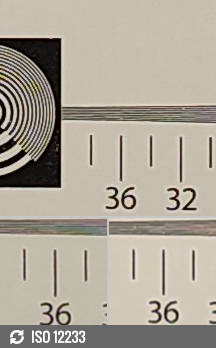


12MP: Realme 5 Pro against the Xiaomi Mi A3 and the Realme X in our Photo compare tool



48MP: Realme 5 Pro against the Xiaomi Mi A3 and the Realme X in our Photo compare tool
Portraits
The Realme 5 Pro shoots portraits with its main 48MP snapper and with the help of the 2MP so-called portrait camera. Realme says this tiny camera is not just a depth sensor but is also used to enhance the contrast of the said portraits. Well, let's see.
Indeed, the Realme 5 Pro takes excellent portraits with competent subject detection and pleasingly convincing background blur. Even a messy haircut wasn't enough to throw it off the rails, so we rate these shots as outstanding.
Note that when the light is not optimal, the detail on people drops dramatically.





Realme 5 Pro 12MP portraits
Selfies
The Realme 5 Pro has the same 16MP f/2.0 selfie camera as the Realme X and the focus stays fixed. On the software side, there are all sorts of beatification enhancement options like skin smoothing and eye enlargement and face thinning, and whatnot.
When light is in abundance the phone keeps the ISO at base and you'll get super detailed and sharp selfies. The last selfie was shot in HDR.



Realme 5 Pro 16MP selfies
In even moderately dimmer conditions there's a noticeable drop in sharpness at the pixel level, likely caused by aggressive noise reduction. In any case, colors are rendered nicely, and dynamic range is reasonably wide.



Realme 5 Pro 16MP selfies
You can use portrait mode for selfies, too. Those are saved in 8MP instead of 16MP, and turned out quite good. The phone does a nice job with subject separation and we didn't get (many) clipped ears or the like. Again, anything less than ideal light will result in a drop in sharpness.



Realme 5 Pro 8MP selfie portraits
Video recording
The Realme 5 Pro captures videos only with its main (48MP) camera. It records video up to 4K at 30fps and there's 1080p at both 30fps and 60fps. You get the option to choose between the h.264 and h.265 codecs. There's no mention of video stabilization in the menus or the viewfinder but Realme mentions EIS within the phone specs. We found that the electronic stabilization works only on 1080p at 30fps setting.
Just like on its previous models, Realme is super generous with the bit rates it uses to encode videos. 4K footage gets 50Mbps while 1080p/30fps is allocated a similarly above-average 20Mbps when using the h.264 codec. It's then weird that the audio bitrate is just 96kbps, but at least it's stereo.
The 4K picture is rich in detail, the colors are spot on, and the dynamic range is impressive. There is some noise in the sky, but we can live with that. Those are among the better 4K videos we've seen lately though because of the high video bitrate the storage footprint is rather big - 30s video is about 200MB.
Moving on to 1080p videos. The 30fps clips are pretty nice with good level of detail, lively colors and excellent contrast. The dynamic range is as impressive as on the 4K ones. But since there is always-on electronic stabilization involved, those lose some FoV and detail in the process.
And the lack of EIS is reason why the 1080p videos we took at 60fps are simply amazing. They are much more detailed, and keep all the goodies - colors, contrast, and dynamic range.
Finally, we shot some 2X videos at 1080p resolution and those are pretty good - one of the benefits of having such a big 48MP sensor. You can even shoot in 5X zoom or in 4K 2X/5X zoom but the clips don't even deserve to be published.
Here's a glimpse of how the Realme 5 Pro compares to rivals in our Video compare tool.
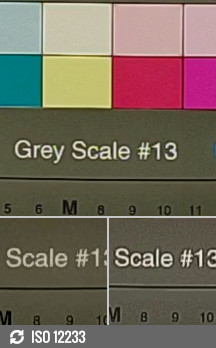

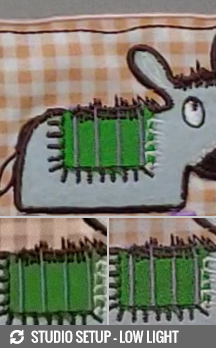
Realme 5 Pro against the Xiaomi Mi A3 and the Realme X in our Video compare tool
Wrap-up
It's always easy with Realme - we begin these reviews expecting some impressive bang for the buck and we get it every single time. The Realme 5 Pro is no different - there is an impressive specs sheet with a high-end camera setup on a bargain price.
The looks of Realme keep evolving for the better and we like the new Realme shapes a lot. The added splash resistance is a game changer for series 5, but for the Pro model its premium camera is the real showstopper.
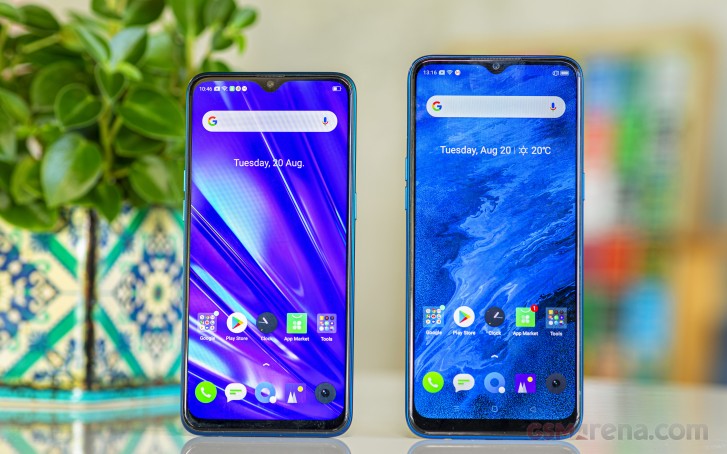 Realme 5 Pro and Realme 5
Realme has thought of everything on the Realme 5 Pro and it delivers good, if not excellent marks across the board. It is definitely a tough one to beat, especially in India.
We have only once concern - it's been fifteen months since Realme's inception, and the maker has already launched thirteen models with a fourteenth (XT) all but official. And that's great - there is something for everybody, but we fear that soon the quality of the support and the attention to detail might go away in favor of quantity. And we do hope Realme proves us wrong!
The competition
As it often happens with Realme, the competition is mostly inhouse. If you want a splash-proof Realme but doesn't care about the benefits of the 48MP sensor, then the cheaper Realme 5 is just as good. It has a similar camera arrangement, and while its screen resolution is lower at 720p, the 5,000 mAh battery will last you forever in smartphone terms.
Realme 3 Pro is also cheaper, offers the same screen and power punch, it's just not shielded against water and doesn't have the fancy main camera.
Then the Realme X is a bit more expensive but will offer you a notch-less AMOLED screen with an in-display fingerprint scanner. It has a 48MP camera but is accompanied only by a depth sensor. You have to pick your priorities, obviously.



Realme 5 • Realme 3 Pro • Realme X
The Galaxy M30 is a good option that costs as much as the Realme 5 Pro. It has a similar screen, but it's a Super AMOLED one. Its performance is not that great though, and nor is the main camera quality.
Redmi Note 8 will be launching on a similar price in a few weeks and it's a perfect match for the Realme 5 Pro. The Note 8 has pretty much the same screen, is powered by the Snapdragon 665 chip, and packs the same quad-camera at the back. It is not splash-resistant, but if you prefer MIUI, the Note 8 might be your phone.


Samsung Galaxy M30 • Xiaomi Redmi Note 8
The verdict
Obviously the Realme 5 Pro is without any competition in the markets it's available in. It is an amazing offer with a great screen, powerful hardware, and one very capable versatile camera. The battery life turned out excellent as well. If you are lucky enough to have Realme phones available where you reside, there is hardly a better phone for this amount of money. Until another Realme dethrones this one, that is.
Pros
- Large screen with small cutout, excellent contrast
- Stunning design, splash resistant body
- Outstanding battery life
- Snappy performance, great for gaming
- The main camera snaps high-quality images day and night
- The portrait shots are impressive
- Impressive video quality on all resolutions
- A dedicated microSD slot, 3.5mm jack, FM radio
Cons
- Limited regional availability
- The macro and ultrawide shots are uninspiring
- EIS is only available at 1080@30fps

No comments:
Post a Comment