
Introduction
We've grown to appreciate Oppo's relentless drive for breaking the mold and introducing unorthodox innovations - be it a swivel or a pop-up camera, geometry-inspired panels, the VOOC fast charging, or even soccer-themed phones.
The latest Find X3 Pro flagship doesn't shy away from innovation either - in addition to the cutting-edge specs and design, the new Find also bets big on 10-bit color by pushing 10-bit cameras and a 10-bit screen to make sure you are viewing what you've captured in its full glory.
Indeed, the Oppo Find X3 Pro was presented under the Awaken Color slogan, meaning you can capture and see 1 billion colors with the hit of a button - something you can't do anywhere else, not that easily, at least.
There is a curved 6.7" 10-bit OLED screen of high resolution and high refresh rate, while on the back, you'll find a quartet of snappers that can capture the world around you with 10-bit color.
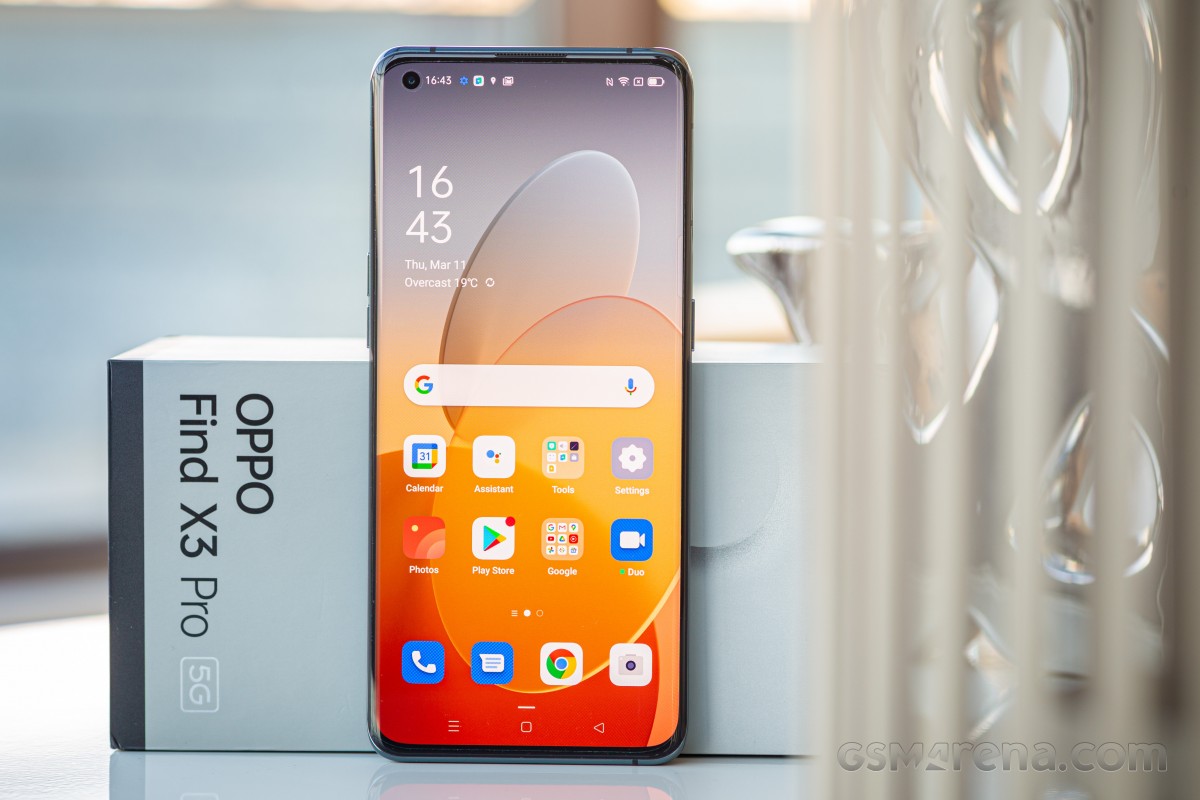
The whole Find X3 Pro was thoughtfully designed to envelope these two key features into one extraordinary-shaped and waterproofed body. Everything looks so well designed, and the organic curves around the rear camera are something we haven't seen so far, so kudos for that!
The quad-camera on the back is also bringing surprises - while it looks like your typical quartet of wide/ultrawide/tele/macro, it is, in fact, more than meets the eye. The two wide snappers use identical 50MP Sony IMX 766 sensors, with different optics, of course, then we have a 13MP 2x tele, and a 3MP microscope camera with 60x magnification and a LED ring flash around the whole things. The micro camera will let you to see details that are invisible to the naked eye and sounds really cool on paper. We just can't wait to test it. Is it another gimmick? Maybe! But color us intrigued as we haven't seen such type of shooter on any phone.
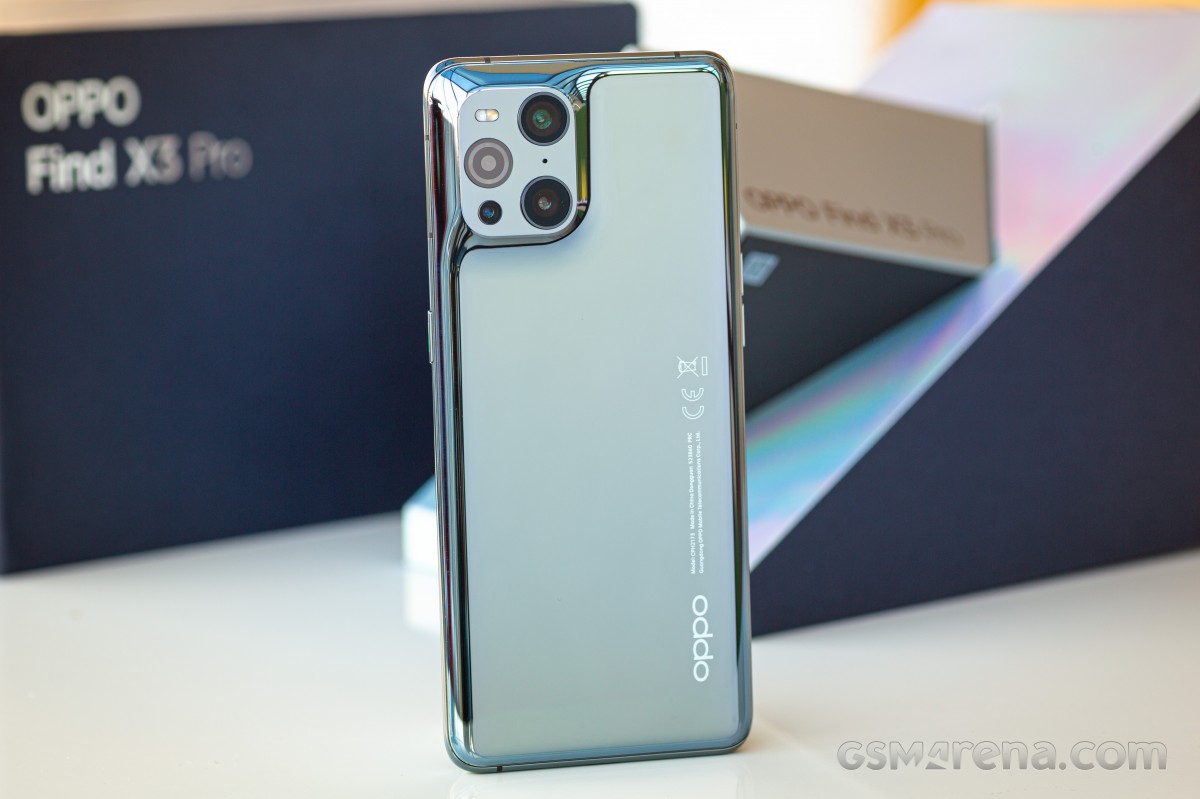
The Oppo Find X3 Pro offers the current best Snapdragon 888 chipset with a 5G modem and support for thirteen 5G bands.
The phone is sold in a single configuration, but it is more than fitting for a flagship - 12GB of LPDDR5 RAM with 256GB of UFS3.1 storage.
You also get Dolby Atmos-certified stereo speakers and a large 4,500mAh battery with the latest 65W VOOC fast charging. It can even do fast wireless and reverse wireless charging if that's your thing.
Oppo Find X3 Pro specs at a glance:
- Body: 163.6x74.0x8.3mm, 193g; Glass front (Gorilla Glass 5), glass back, aluminum frame; IP68 dust/water resistant (up to 1.5m for 30 mins).
- Display: 6.70" LTPO AMOLED, 1B colors, 120Hz, HDR10+, 500 nits (typ), 1300 nits (peak), 1440x3216px resolution, 20.1:9 aspect ratio, 525ppi.
- Chipset: Qualcomm SM8350 Snapdragon 888 (5 nm): Octa-core (1x2.84 GHz Kryo 680 & 3x2.42 GHz Kryo 680 & 4x1.80 GHz Kryo 680; Adreno 660.
- Memory: 256GB 8GB RAM, 256GB 12GB RAM; UFS 3.1.
- OS/Software: Android 11, ColorOS 11.2.
- Rear camera: Wide (main): 50 MP, f/1.8, 1/1.56", 1.0µm, omnidirectional PDAF, OIS; Ultra wide angle: 50 MP, f/2.2, 110˚, 1/1.56", 1.0µm, omnidirectional PDAF; Telephoto: 13 MP, f/2.4, 52mm, 2x optical zoom, 5x hybrid zoom, PDAF; Macro: 3 MP, f/3.0.
- Front camera: 32 MP, f/2.4, 26mm (wide), 1/2.8", 0.8µm.
- Video capture: Rear camera: 4K@30/60fps, 1080p@30/60/240fps; gyro-EIS; HDR, 10‑bit video; Front camera: 1080p@30fps.
- Battery: 4500mAh; Fast charging 65W, 40% in 10 min (advertised), Fast wireless charging 30W, 100% in 80 min (advertised), Reverse wireless charging 10W, SuperVOOC 2.0, USB Power Delivery.
- Misc: Fingerprint reader (under display, optical); stereo speakers; NFC.
A quick look through these specs, and we are already intrigued by the 10-bit promises and the microscope camera. We appreciate Oppo throwing in official IP68 certification, and it seems Xiaomi is the last one of the major makers that still stubbornly refuses to get that for its phones.
The Find X3 Pro will be sold in many international markets, and Oppo is offering a free global warranty to go with it, one similar to what Apple is promising for its iPhones and Macbooks. It is one of the concerns when buying a Chinese phone, and we like that Oppo is stepping up its game.
And now, without further ado, let's unbox our Gloss Black Oppo Find X3 Pro.
Unboxing the Oppo Find X3 Pro
Unlike them Galaxies and iPhones, the Oppo Find X3 Pro arrives in a big fat retail box jam-packed with stuff. In addition to your new Find X, inside, you'll also find a 65W VOOC 2.0 power adapter and a 6.5A-rated USB-A-to-C cable that you'll need to reach the max wattage.
The retail bundle also contains a USB-C EarPods-like headset and a black protective case made of rubber with a nice matte finish.
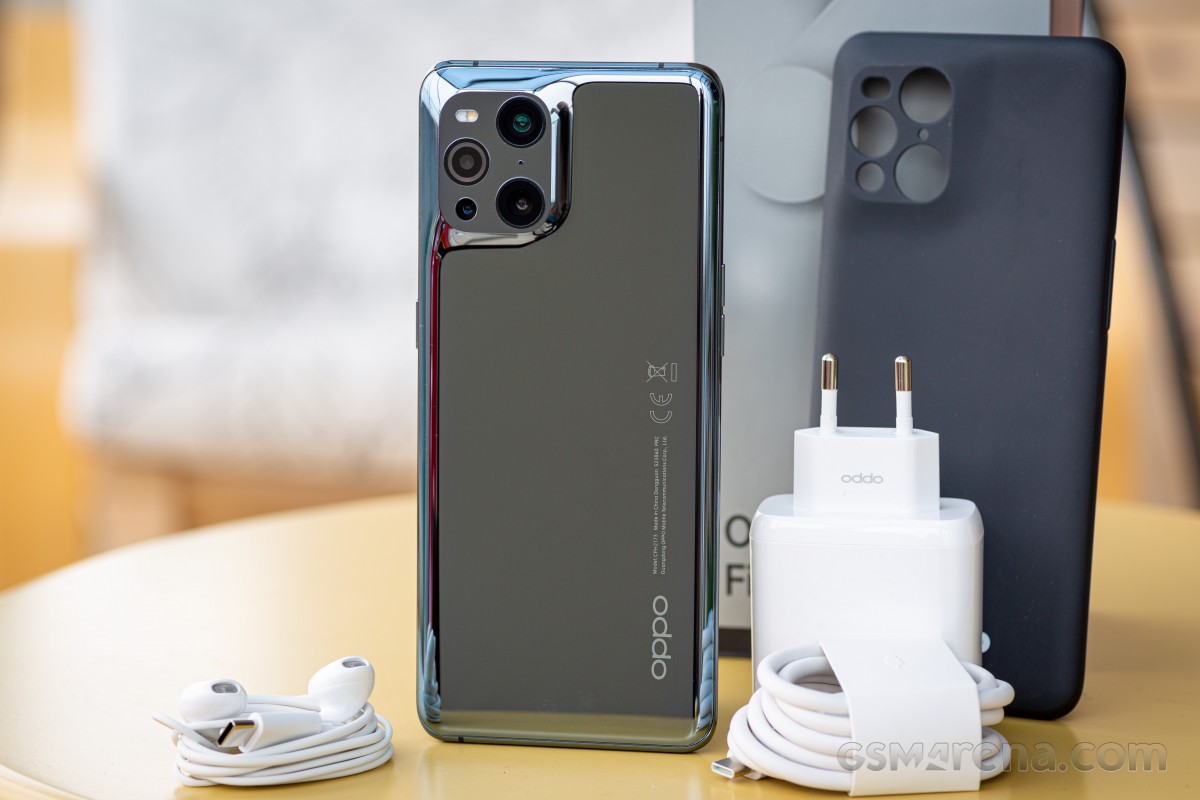
The Oppo Find X3 Pro comes with a thin plastic film applied on the screen, but this can hardly pass for a screen protector. There is a Gorilla Glass 5 shielding the screen, so you are well covered. This cheap film gets smudgy in seconds, so we'd suggest peeling it off immediately and opting for a proper protector, if you decide you need one, that is.
Design, build, quality
Undeniably, the first thing anyone would notice about the Oppo Find X3 Pro is its design.
While the new Oppo is built by the book - meaning a glass-sandwich with an aluminum frame - there is something enthralling about its organic curves that makes you want to pick up this phone in your hands and feel the material.
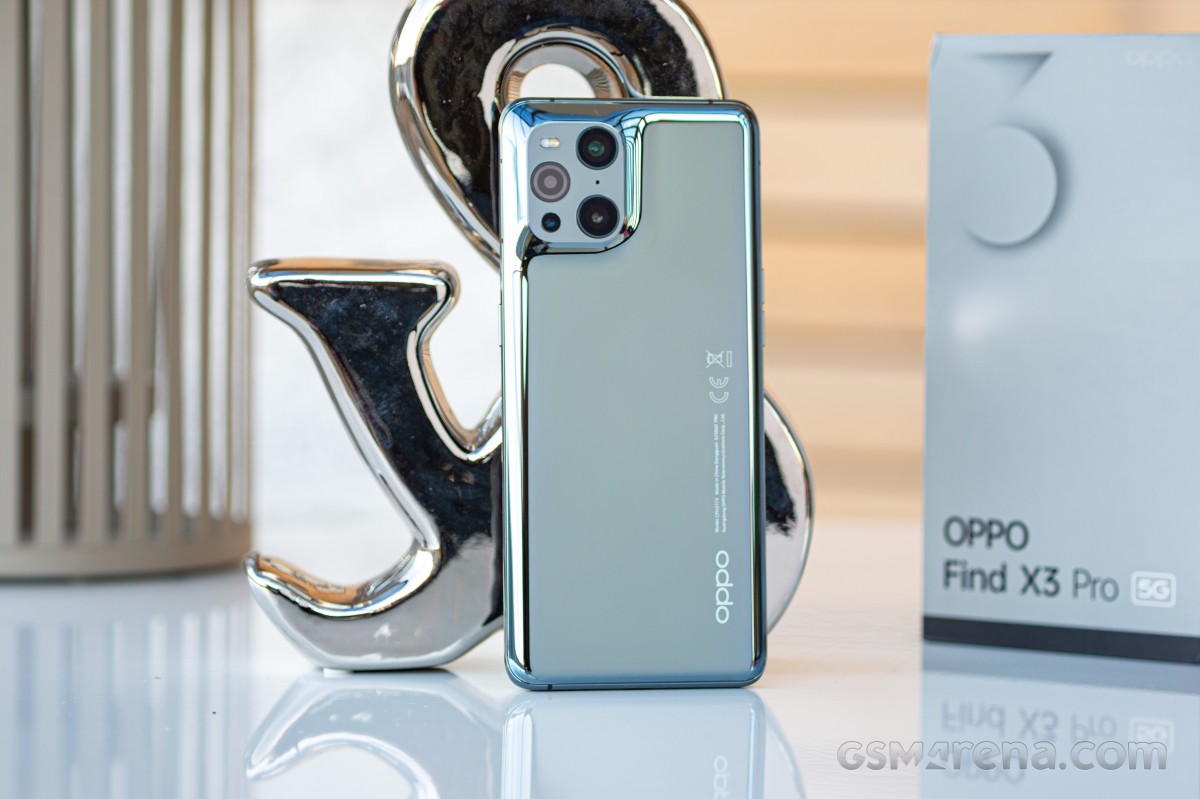
The Oppo Find X3 Pro uses a slightly curved Gorilla Glass 5 piece at the front, and with the screen off, the X3 Pro looks just like the X2 Pro, and you cannot tell those apart. But once you lay your eyes on the back, you will recognize the Find X3 Pro immediately as it is one of a kind.

The Find X3 Pro, just like its predecessor, is IP68-rated for dust and water resistance, and we are glad to see Oppo sticking to these official certifications.
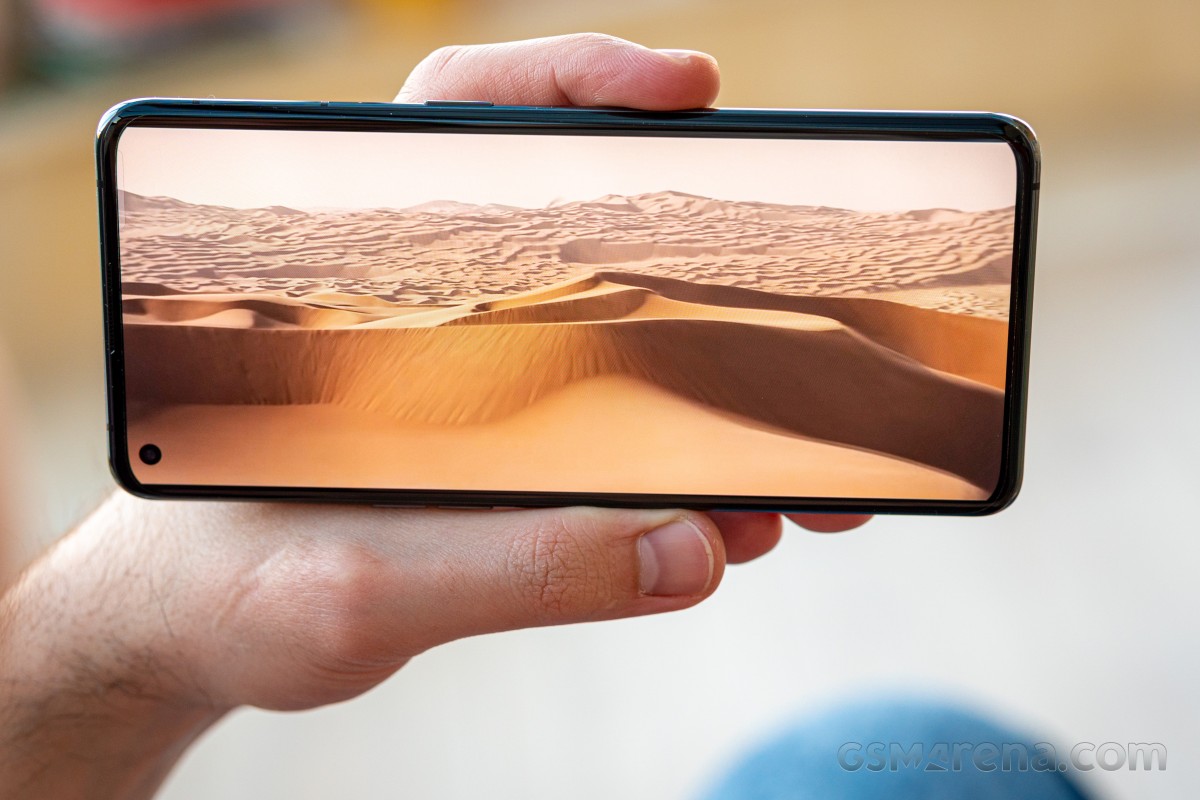
Most of the front is occupied by the 6.7" QHD 120Hz AMOLED panel. The screen isn't curved; it's the glass that has been curved around the longer sides. The bezels are incredibly thin, and we've learned to live just fine with small punch-holes like the one on the Find X3 Pro.
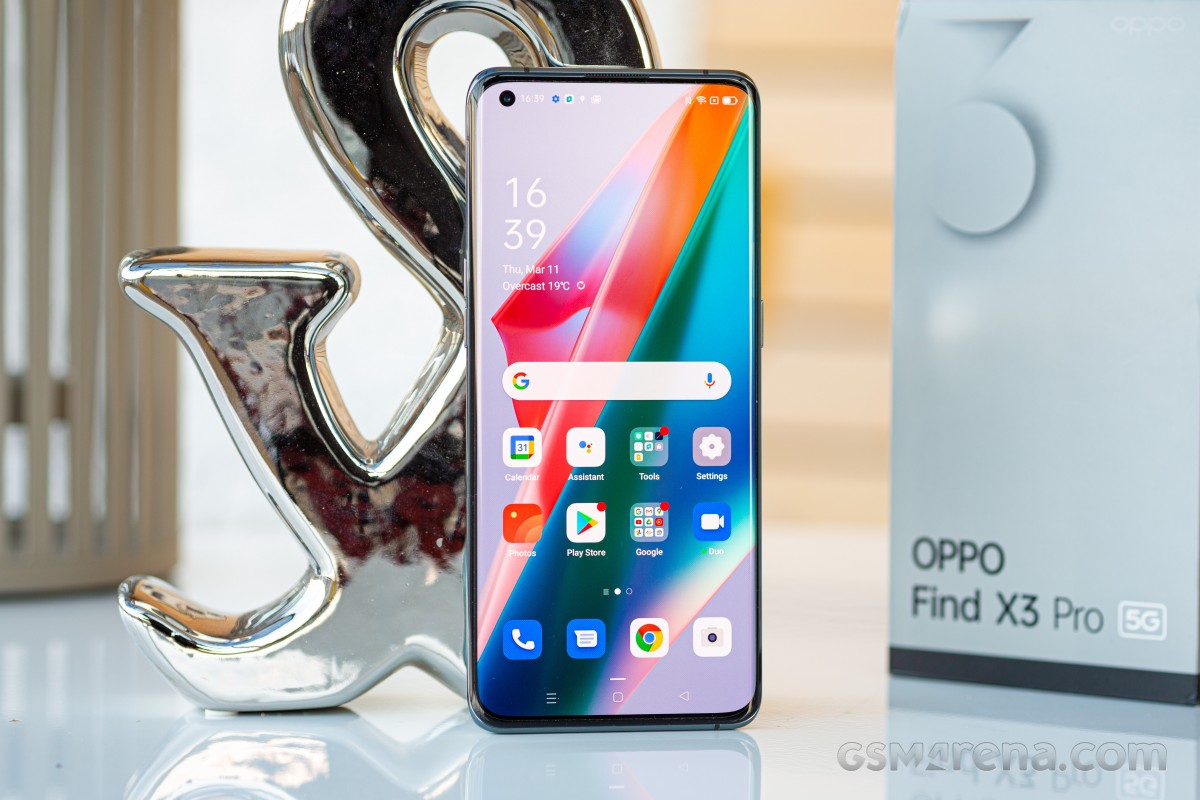
The AMOLED is impressive on paper, not only because of its 1440p resolution and 120Hz refresh rate but because it supports 10-bit color and can display more than 1 billion colors. Only a handful of smartphones can do that, including the Find X2 Pro and this new Find X3 Pro.
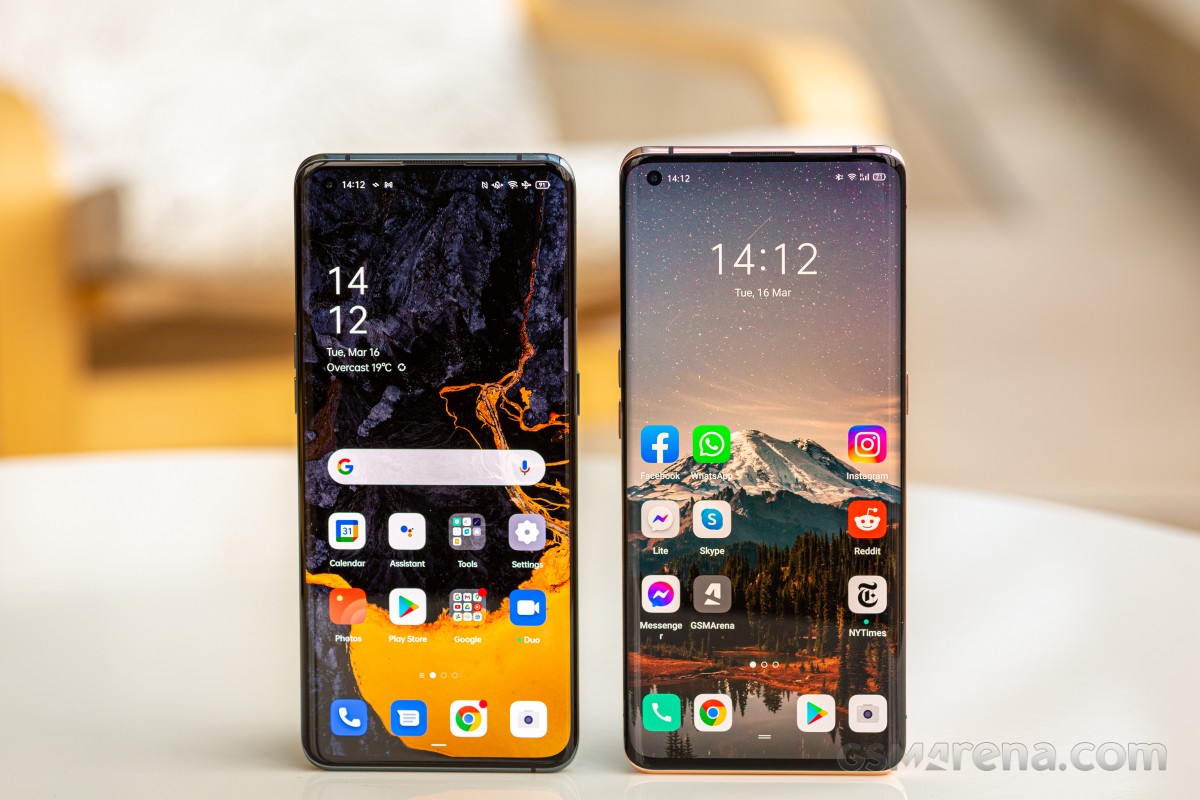 Oppo Find X3 Pro next to the Find X2 Pro
There is an optical fingerprint scanner under the screen, and it is the fastest one you can get today. Its performance, both speed and accuracy, is comparable to that of conventional readers, and our experience with the sensor was completely trouble-free and very satisfying.

The selfie camera and earpiece • the fingerprint scanner
There is one thin slit of a grille above the screen, which hides one of the stereo speakers. We are not sure if the earpiece is a standalone thing behind this grille or the speaker acts like one, but we can confirm the top speaker is as powerful as the bottom one - something we don't hear every day.
We've already expressed our fondness of the back, but let's do that again. We have the Gloss Black version, which is super glossy and not that black but more like a dark gray. Oppo made it that glossy on purpose, as it wanted it to look like ceramic. And it sure does. That's the good news. The bad - this finish is prone to collecting fingerprints and smudges.
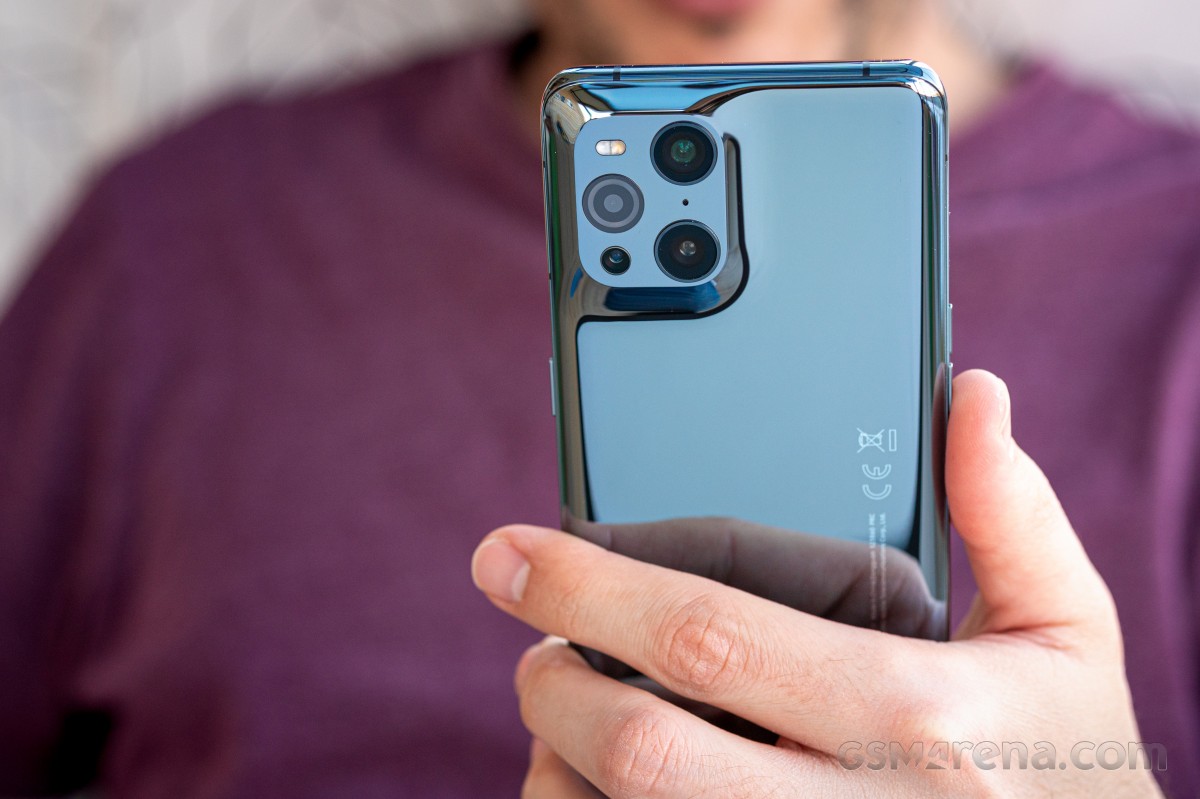
There is another version of the Find X3 Pro - simply called Blue - which features an anti-glare frosted finish. This one feels silky smooth and repels fingerprints and smudges very well. We like that Oppo gave us two different options - not everyone likes glossy.
Opposite to what you may expect, the glossy version (ours) is the one that provides more grip. The fingers somewhat stick to the glass even if the frame is mostly slippery as it is thin, curved, glossy and making it really hard to pick up the phone from a desk. Not that the Gloss Black is making for a great experience, it's just that the frosted one is a bit more slippery, so do have this in mind.
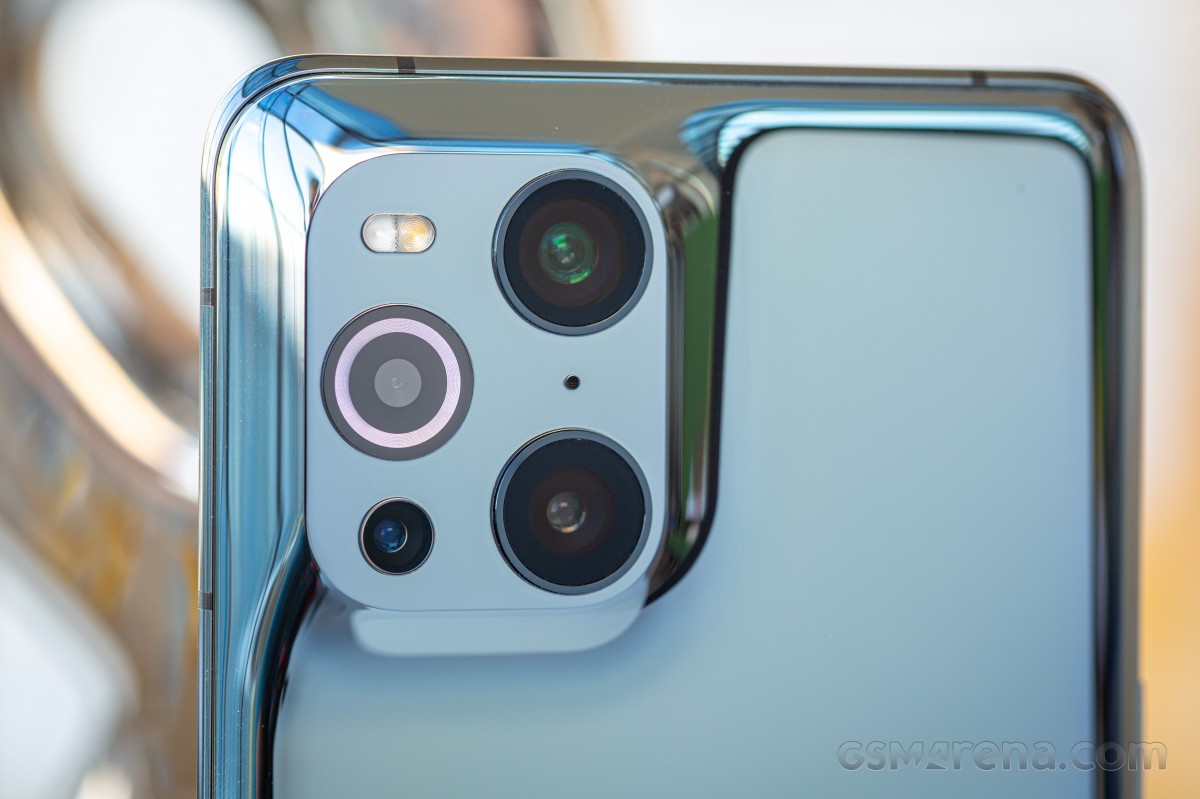
The rear camera is the real showstopper on the back, and it does look magnificent. Its right column contains the dual-LED dual-tone flash, the 3MP micro camera with a LED ring of its own, and the 13MP tele camera. The left column has the two 50MP wide-angle shooters.
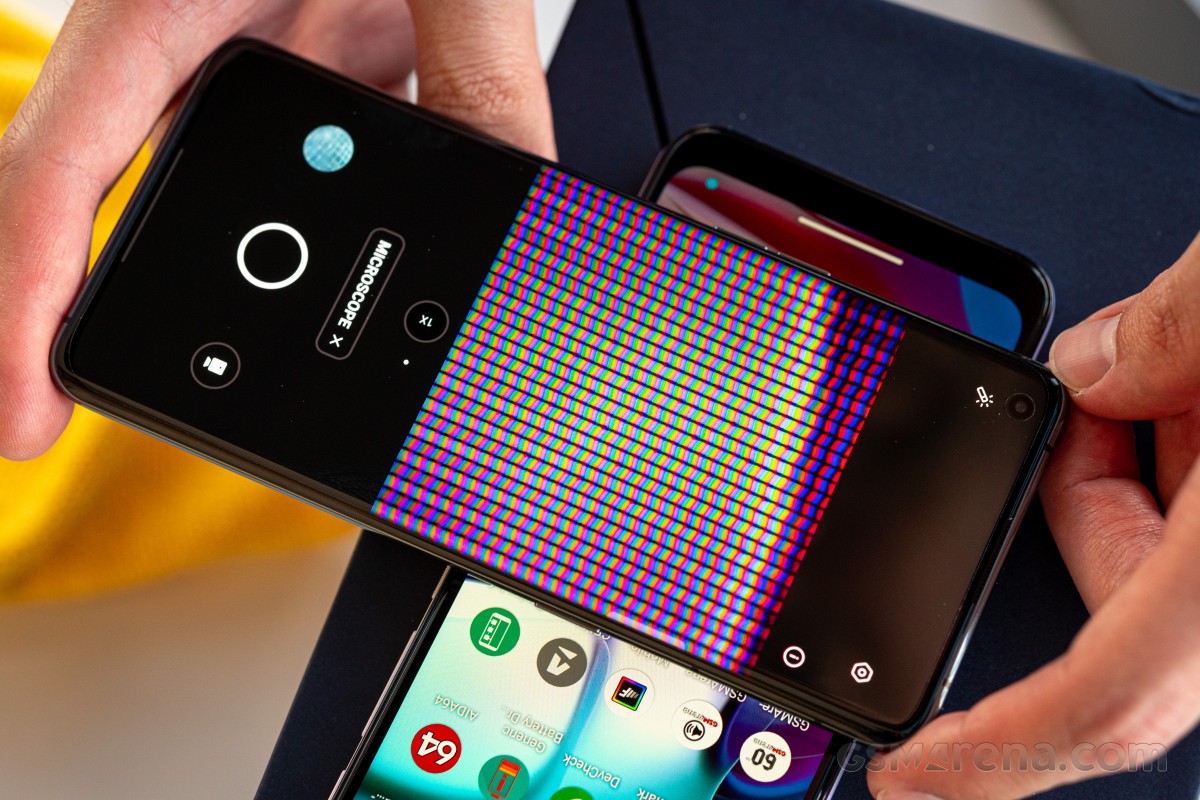
The small ring LED flash around the 3MP camera is not that bright, but it is essential for microscopic photography. You are going to be shooting from as close as 1mm to your subject - meaning you will literally touch your subject with the phone, and the Find X3 Pro will cast a shadow over it unless you have artificial lights. So, the flash will come in handy.
Let's look around the sides now. The volume keys are on the left, while the lone power/lock key is on the right.
The top houses one tiny mic pinhole, while the bottom is overcrowded as usual. Here you'd find the dual-SIM tray, the USB-C port, the mouthpiece and the other stereo speaker.



The top side • the right side • the left side
The Oppo Find X3 Pro measures 163.6 x 74 x 8.3 mm and weighs 193 grams. That's about the same as the Find X2 Pro, but 24 grams lighter than the Ceramic version and 7 grams lighter than the Vegan Leather model.
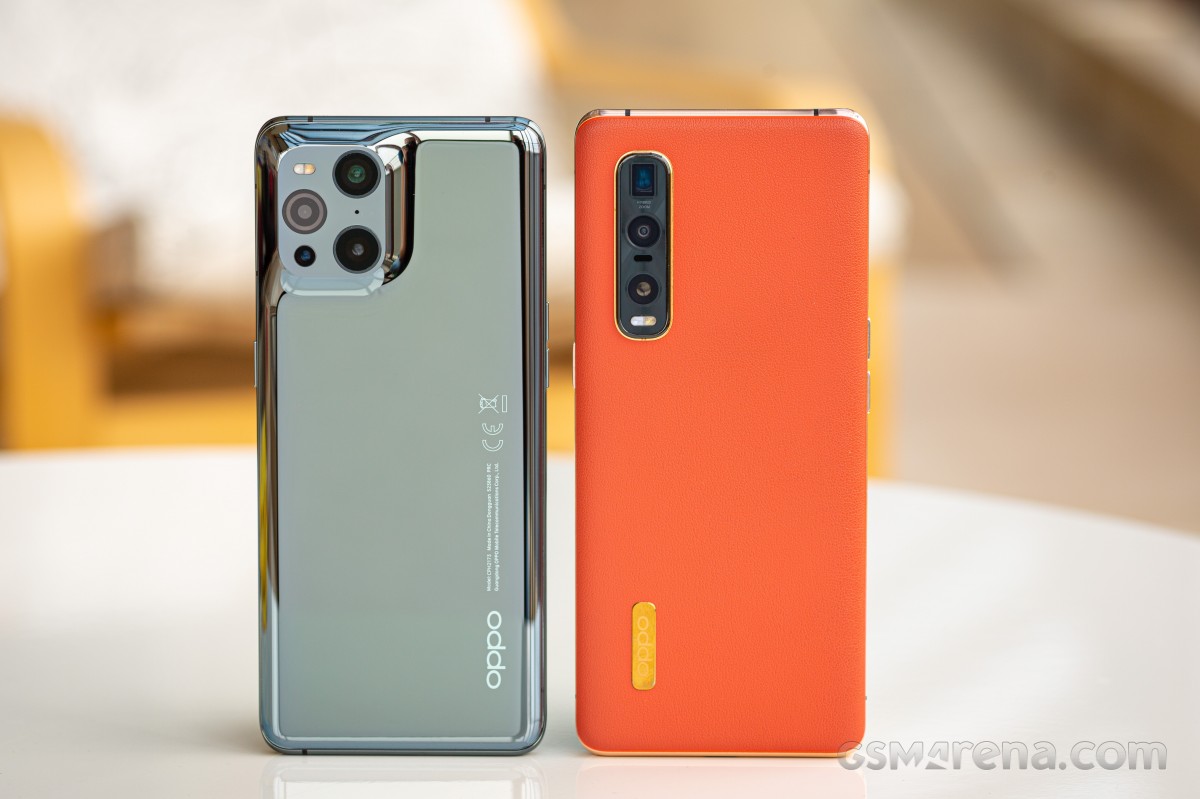 Find X3 Pro and Find X2 Pro
The Find X3 Pro feels incredibly thin and lightweight - more so than most of the recent flagships of similar caliber we've handled.
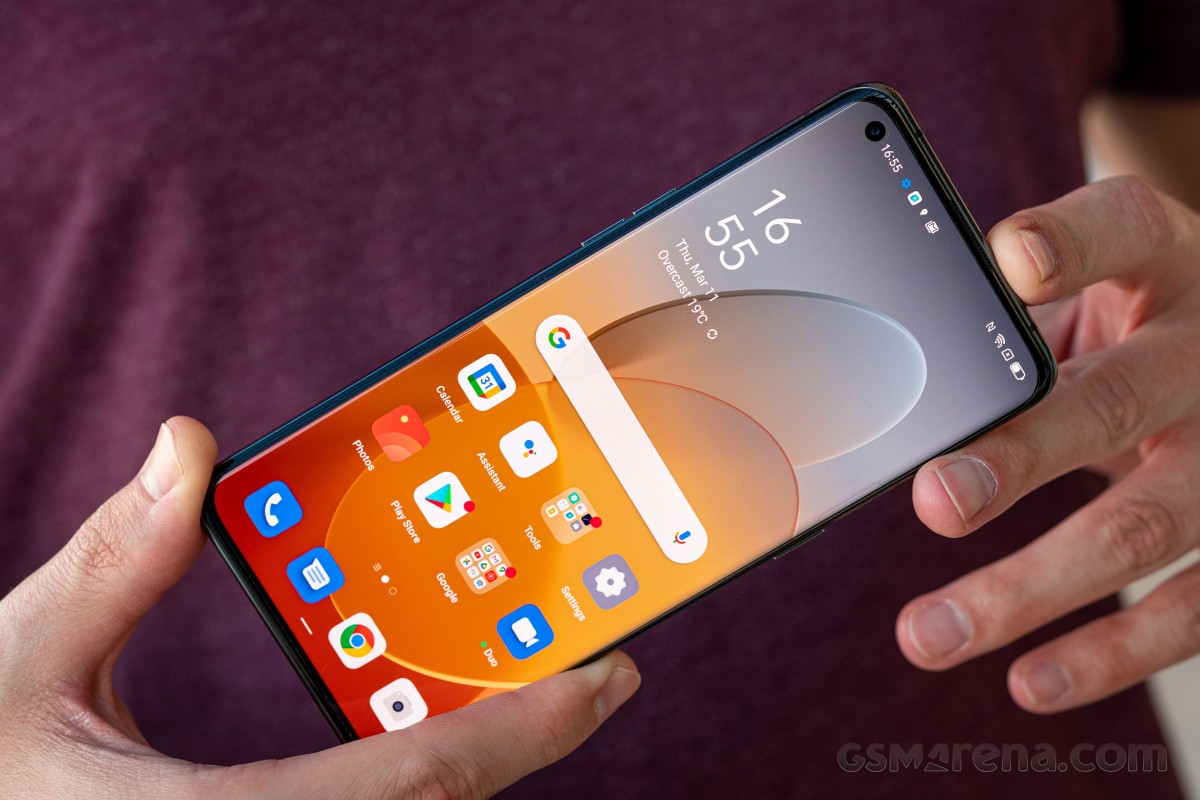
Overall, we like the design of the Find X3 Pro - it has a unique back that takes a bit of a different approach to how the camera bump can look, and it has worked well for it. We also appreciate the waterproofing, and if it weren't for the unreasonably thin and curved frame, we would have labeled the design as perfect. It's a near miss, though.
QHD 120Hz AMOLED screen
The Oppo Find X3 Pro employs a similar display to the one we enjoyed on the Find X2 Pro. It's a 6.7" LPTO AMOLED screen of 3,216 x 1,440 px resolution or 525ppi density. The panel supports 10-bit color and can display more than 1 billion colors vs. 16 million on most competing phones. Quite expectedly, it is HDR10 and HDR10+ certified.
The Find X3 Pro screen also supports a 120Hz adaptive refresh rate, while the touch matrix works with 240Hz sampling rate.
And to wrap up the specs, the screen misses a few pixels as it has a punch hole for the selfie camera. Finally, it is protected by a slightly curved Gorilla Glass 5 piece.
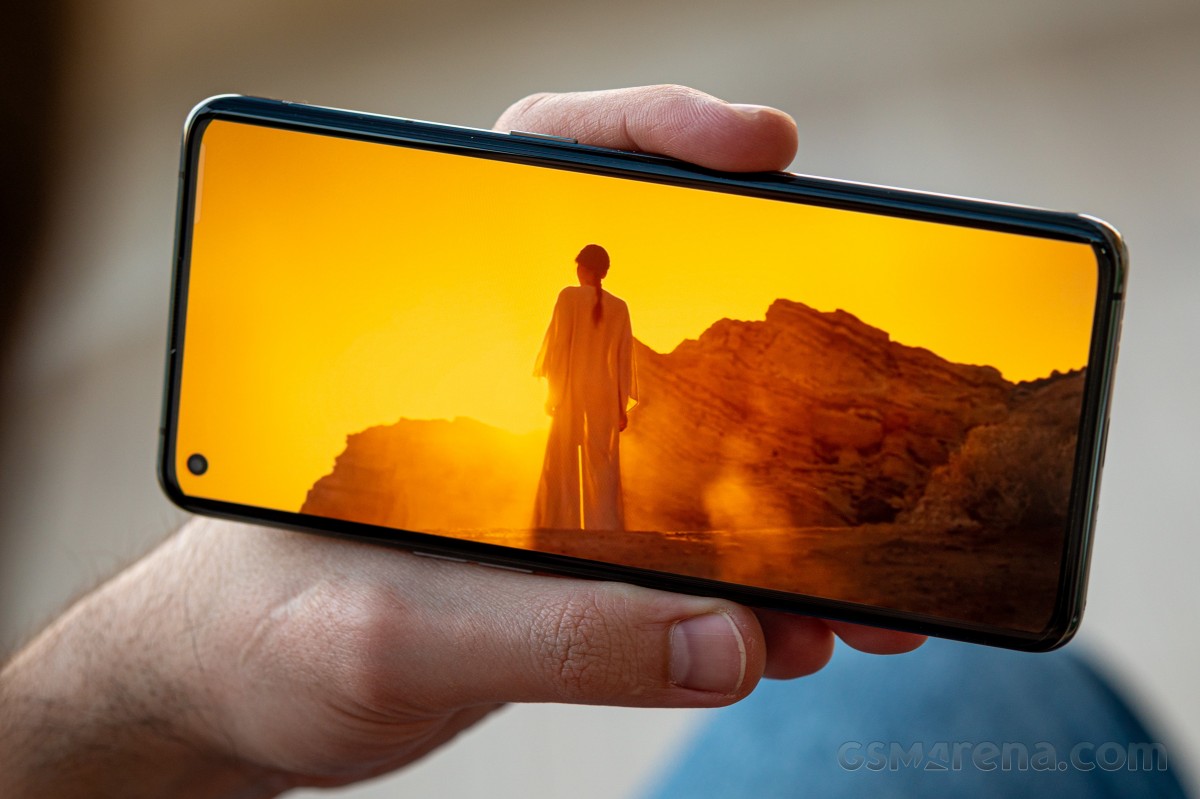
Oppo promises 500 nits of typical manual brightness, 800 nits of typical auto (sunlight) brightness, and up to 1,300 nits of peak brightness in a small screen area. We can't really measure the peak brightness, which is usually achieved when viewing HDR content, but we can measure the rest.
Well, the screen lives up to the promises - we captured 493 nits at the end of the brightness slider, but it can go up to 505nits when using different color modes. When the screen brightness is set on Auto, the panel can light up as bright as 774 nits.
Finally, the minimum brightness is excellent at just 2.2 nits!
| Display test | 100% brightness | ||
| Black, |
White, |
||
| 0 | 493 | ∞ | |
| 0 | 774 | ∞ | |
| 0 | 536 | ∞ | |
| 0 | 871 | ∞ | |
| 0 | 518 | ∞ | |
| 0 | 850 | ∞ | |
| 0 | 426 | ∞ | |
| 0 | 458 | ∞ | |
| 0 | 1023 | ∞ | |
| 0 | 459 | ∞ | |
| 0 | 883 | ∞ | |
| 0 | 822 | ∞ | |
| 0 | 498 | ∞ | |
| 0 | 926 | ∞ | |
| 0 | 538 | ∞ | |
| 0 | 888 | ∞ | |
| 0 | 485 | ∞ | |
| 0 | 807 | ∞ | |
| 0 | 455 | ∞ | |
| 0 | 760 | ∞ | |
| 0 | 498 | ∞ | |
| 0 | 811 | ∞ | |
Oppo's promises 100% coverage for the DCI-P3 color space for the Find X3 Pro screen with near-perfect accuracy. But before we get down to the numbers, let's talk about the display options.
First, there is a Nature Tone option, off by default, which is the same thing as Apple's True Tone - it adjusts the color saturation depending on the available light and its temperature. We did our measurements with this thing turned off.
The color options are a bit misleading. Both the default Vivid and the optional Cinematic mode mention P3 coverage in the description. Vivid is off the mark - we measured an average deltaE of 3.9 and a maximum of 9 for our set of DCI-P3 test swatches, with white and grays shifted noticeably towards blue.
Switch to Cinematic mode, however, and you'd get the promised accuracy - our readings showed an average deltaE of 1.6 and a maximum deviation of 2.5.
Finally, the Gentle mode is tuned for accurate sRGB reproduction and does an excellent job at it as well - the average deltaE is 1.5.
Now, let's talk about the refresh rate. You can choose between 60Hz or 120Hz, with the latter being adaptive. Oppo is promising the dynamic refresh rate can drop down to 5Hz when needed, say reading an eBook. Well, it's not that adaptive after all - Oppo either sugar-coated this thing, or it is yet to offer a better implementation via a software update.
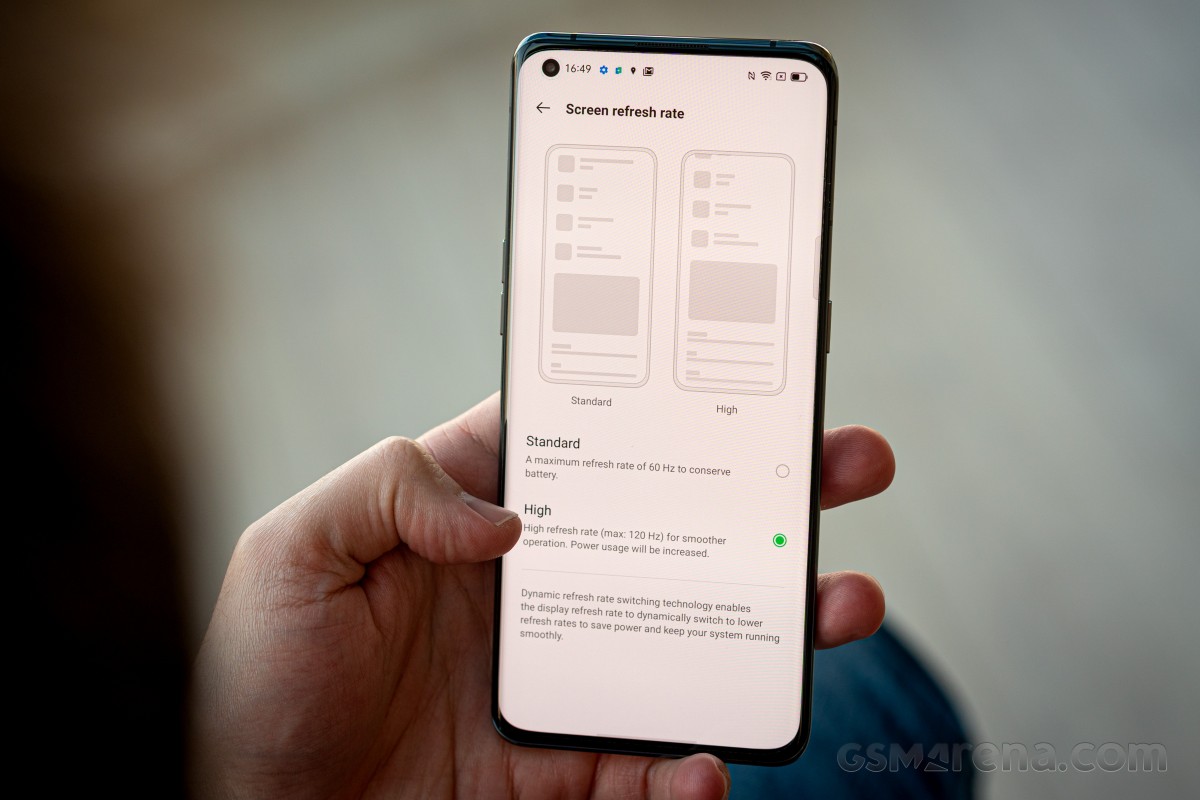
In our experience, the Find X3 Pro is always using 120Hz when showing the UI and the default system apps. It will revert to 60Hz sometimes when the picture is static for battery-saving reasons, as most of the HRR phones do. The default video player and YouTube always work at 60Hz, while Netflix and the likes run their UIs with 120Hz but switch back to 60Hz once the streaming starts. Finally, some games like Dead Trigger 2 run at 120fps, so you can expect compatible games to make use of Find X3 Pro's HRR screen.
And that's about it. We saw no 90Hz, no 30Hz, no 5Hz refresh rates, nor anything in-between. We tried eBook apps, different scenarios, and various games, but alas - the phone used either 60Hz or 120Hz, and that's it.
Finally, for those who wonder, the phone supports Widevine L1 DRM, and you can enjoy your favorite streaming shows and movies in 1080p HDR10 quality.
Battery life
The Oppo Find X3 Pro is powered by a 4,500mAh battery, 5% larger than the one inside the Find X2 Pro. It seems adequate on paper, but we've seen the Xiaomi Mi 11 and its Snapdragon 888+QHD 120Hz OLED to perform average, so we weren't holding our breaths here. And we were right.
The Find X3 Pro posted average times on our tests - it can make calls for 23 hours straight, browse web pages for 11 hours, or play videos for 13+ hours. Combining those with the mediocre standby performance made for an uninspiring 81h Endurance rating.
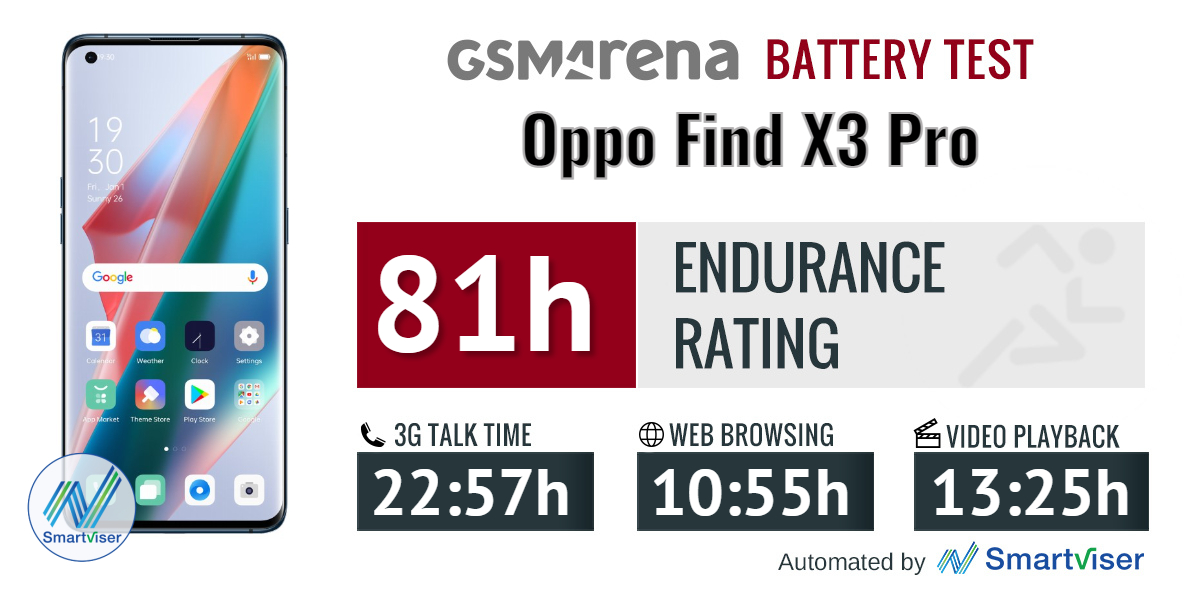
Our battery tests were automated thanks to SmartViser, using its viSerDevice app. The endurance rating above denotes how long a single battery charge will last you if you use the Oppo Find X3 Pro for an hour each of telephony, web browsing, and video playback daily. We've established this usage pattern so that our battery results are comparable across devices in the most common day-to-day tasks. The battery testing procedure is described in detail in case you're interested in the nitty-gritty. You can check out our complete battery test table, where you can see how all of the smartphones we've tested will compare under your own typical use.
Charging speed
The Oppo Find X3 Pro supports 65W SuperVOOC 2.0 fast wired charging, and you are getting the VOOC power adapter as part of the retail bundle. The phone also supports 30W AirVOOC wireless fast charging provided you buy the appropriate charger for that. It can also do reverse 10W wireless charging if your Bluetooth accessories need some top-up.
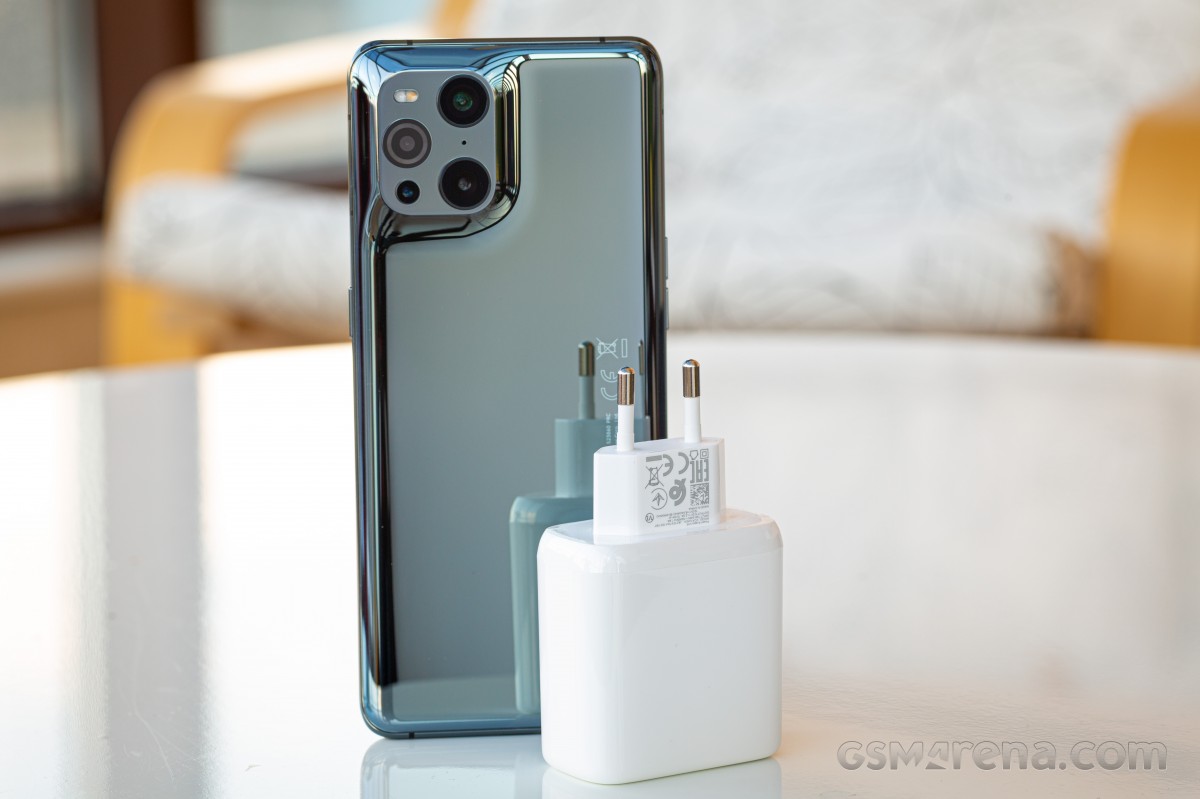
The 65W power adapter should bring a dead battery to 40% in 10 mins. We did test that, and, in fact, the charger replenishes 45% in just 10 minutes, 82% in 20 minutes, and 100% in 28 minutes.
30min charging test (from 0%)
- Oppo Find X3 Pro
100% - Xiaomi Mi 10 Ultra
100% - Oppo Find X2 Pro
95% - Oppo Find X Lamborghini Edition
95% - Oppo Find X2
94% - Realme 7 Pro
94% - OnePlus 8T
94% - Huawei Mate 40 Pro (66W bundled)
87% - Xiaomi Mi 11
83% - Huawei P40 Pro+
77% - Realme 7
58% - Apple iPhone 12 Pro Max
55% - Samsung Galaxy S21+ 5G
54% - Oppo Find X
50%
Oddly, the phone displays Charged about 7 minutes after it has reached 100%, so you should have that in mind.
Time to full charge (from 0%)
- Xiaomi Mi 10 Ultra
0:27h - Oppo Find X3 Pro
0:28h - Oppo Find X Lamborghini Edition
0:35h - Oppo Find X2 Pro
0:36h - OnePlus 8T
0:36h - Realme 7 Pro
0:37h - Oppo Find X2
0:38h - Huawei Mate 40 Pro (66W bundled)
0:45h - Xiaomi Mi 11
0:50h - Realme 7
1:05h - Huawei P40 Pro+
1:10h - Samsung Galaxy S21+ 5G
1:12h - Apple iPhone 12 Pro Max
1:32h
Speakers
The Oppo Find X3 Pro packs a stereo setup with two symmetrically placed speakers (top and bottom). The sound from the top one is coming through the earpiece grille, though we are not sure if the earpiece and the speaker are the same thing or if there are two pieces of different hardware stuffed in there. That's because the two speakers are balanced perfectly - they both offer equal loudness and sound quality - something that's rare with the hybrid setups.

Anyway, no matter how it's done, the setup sounds great, it supports Dolby Atmos, and as far as its loudness is concerned - it scored a Very Good mark on our test.
Unfortunately, the audio quality is average - the speakers offer some bass and high-tones, but they are mostly tuned for making mid-tones sound great. The Find X2 Pro sounds noticeably richer if you play the tracks in our speaker tool below. The new X3 Pro isn't bad; it's just not as great as the competition.
Use the Playback controls to listen to the phone sample recordings (best use headphones). We measure the average loudness of the speakers in LUFS. A lower absolute value means a louder sound. A look at the frequency response chart will tell you how far off the ideal "0db" flat line is the reproduction of the bass, treble, and mid frequencies. You can add more phones to compare how they differ. The scores and ratings are not comparable with our older loudspeaker test. Learn more about how we test here.
Android 11 and ColorOS 11
The Find X3 Pro is the first Oppo smartphone we meet that boots Android 11 with the new ColorOS 11.2 out of the box. The ColorOS version numbers jumped from 7 to 11, probably to match the Android version, and that's why there was no ColorOS 8, 9 or 10. The launcher has been reworked, and it is now faster, more responsive, with better RAM management and overall stability. It comes with improved system apps, especially the music player, new wallpapers, icons, and other UI changes.
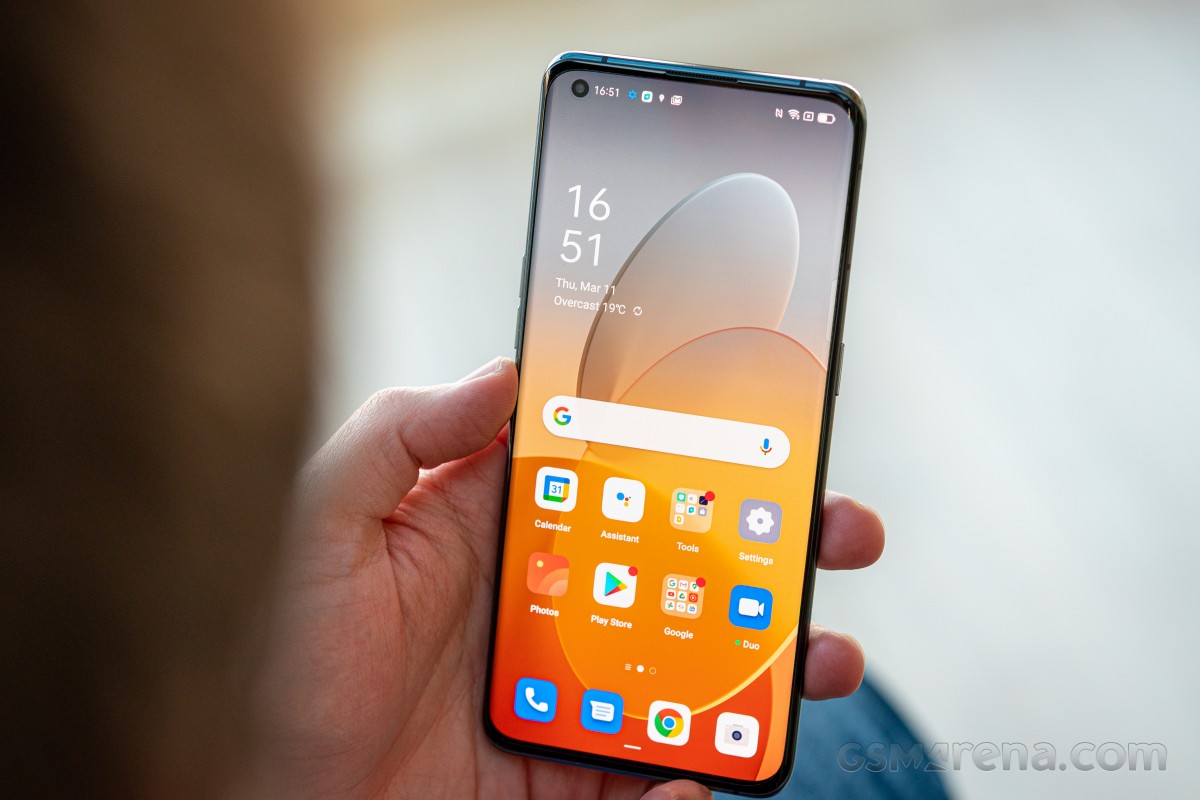
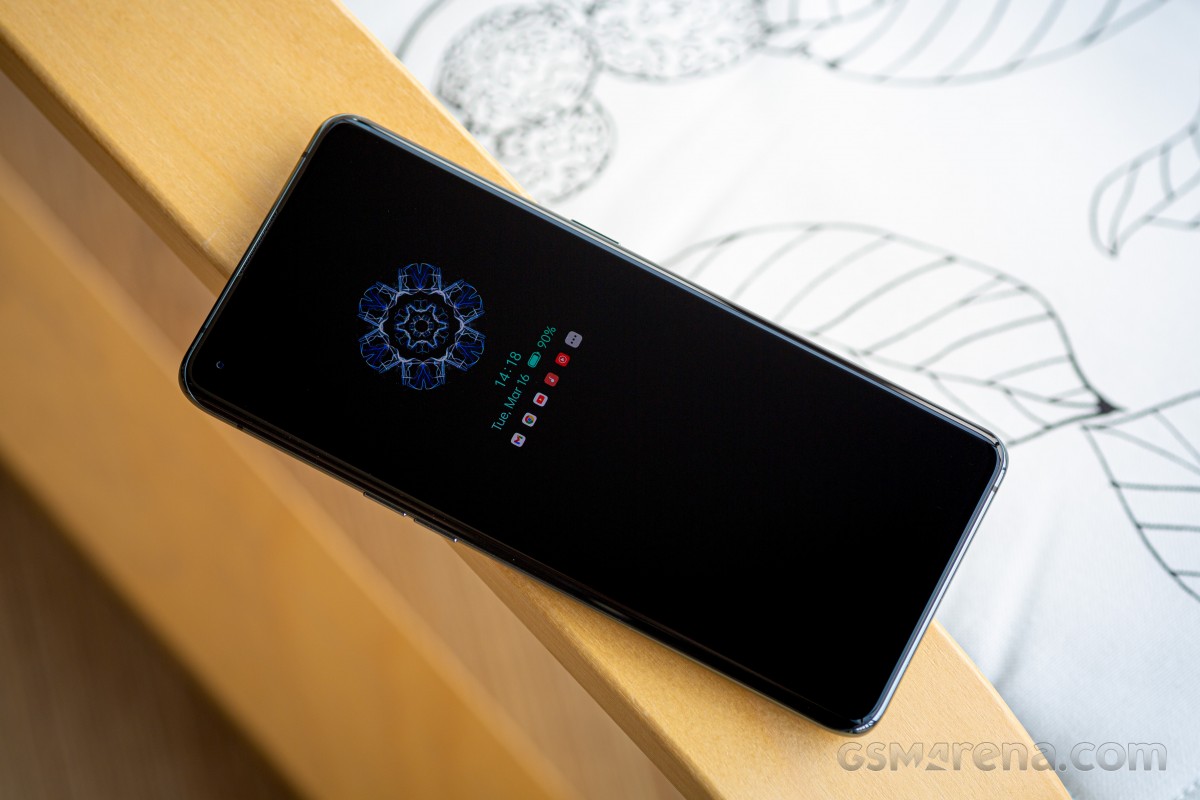
The Oppo Find X3 Pro supports an Always-on display, and you can schedule it or leave it on/off all the time. ColorOS brings a ton of new AOD themes you can choose from and make it yours. You can customize many of those.

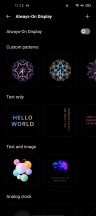
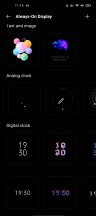
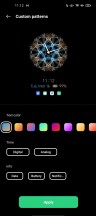
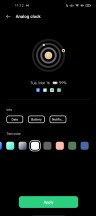

Always-on display
Edge lightning is also supported - the edges of the display will flash with colors upon new notifications.
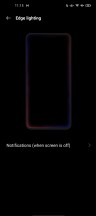

Edge lighting
You unlock the screen via the under-display fingerprint scanner. The reader is easy to set up, unbelievably fast, and with outstanding accuracy. You can choose between different scanner animations, too.
There is 2D Face Unlock as well, but it is far less secure than the fingerprint option.


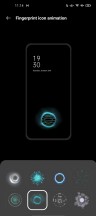
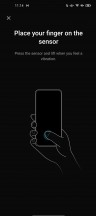

Security options
The homescreens are business as usual - they are populated with shortcuts, folders, and widgets. The leftmost pane is Google's Discover.
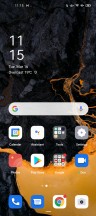


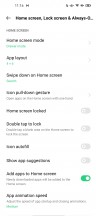

Homescreens, app drawer, settings
ColorOS 11 offers an app drawer, but you can opt-out of it if you want. There is a simple UI mode, too.
The Notification Shade is business as usual - there are quick and expandable toggles, brightness scrubber with Auto switch, and all (expandable) notifications follow after that.
The task switcher has not changed much. It shows all of your recent apps in a single scrollable line, and only three are visible at a time. If you tap on the Settings icon on each card, you will be able to launch that app into split-screen, mini-app window (non-interactable), or in a floating window (interactable). Not all apps support all three modes, and these options won't show if that's the case.



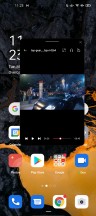
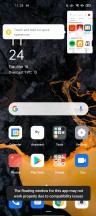

Notification area • Task Switcher • Options • Floating Window • Floating app • Split screen
Personalization is a huge part of ColorOS, and you can change a lot. There are many pre-installed static and live wallpapers, AOD faces, you can opt for different icon styles in both UI and Notification area, change the system colors, system font (Roboto or Oppo Sans), Edge Lighting, and more.
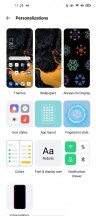
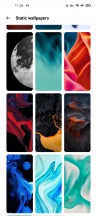
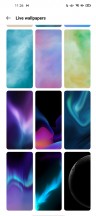


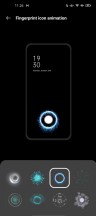




Personalization
ColorOS also offers a Phone Manager app. It can scan your phone for possible optimization options, manages your privacy and app permission, and protects your payment. It also includes a diagnostic tool for a possible hardware malfunction.
ColorOS packs proprietary Photos, Music, and Video apps. Game Space center is also included, and it can be configured to block notifications and auto-brightness adjustments during gaming, as well as more appropriate resource management by prioritizing your game over other services.





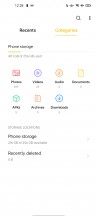
Phone Manager • Photos • Music • Video • Game Center • Files
Oppo is also offering an app called O Relax - it is exactly what the name suggests. You choose between different relaxing themes, games or city noises, pick your mix of sounds, set a timer, and enjoy the ride.



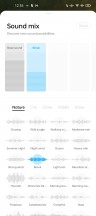


O-Relax
ColorOS supports Dark Mode, too. It is enhanced in version 11 - you can now choose between Enhanced (black), Medium (dark gray) and Gentle (light gray) backgrounds and system hues.
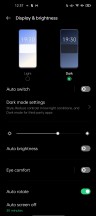
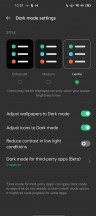


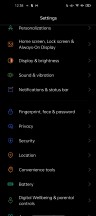
Dark Mode
ColorOS offers these Convenience tools, which can make your experience even smoother. These include screen-on gesture, fingerprint scanner shortcuts (called Quick Launch), three-finger screenshot and screen video capture, smart sidebar, split-screen, quick Google Assistant launch, and more.
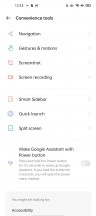


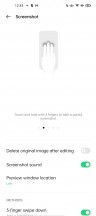

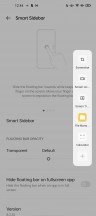
Convenience Tools
Oppo has tasked Hans Zimmer with composing unique notification sounds and ringtones, which will fit the organic theme of the Find X3 Pro. These will be added later on with a firmware update.
ColorOS is fully optimized to work on HRR displays, and it looks gorgeous on the Find X3 Pro. Everything is smooth and fast; animations are unobtrusive yet impressive, the attention to detail is simply excellent. We did enjoy working with ColorOS on the Find X3 120Hz OLED for sure.
Performance and benchmarks
The Oppo Find X3 is among the first smartphones to come with the new Snapdragon 888 chipset by Qualcomm. The SoC is manufactured using a 5nm fabrication process.
The Snapdragon 888 offers an improved eight-core tri-cluster processor that delivers up to 25% better performance over the SD865 CPU and better power efficiency. Headlining these eight cores is a Kryo 680 Prime @ 2.84GHz based on the ARM's top Cortex-X1 design. Next up is a trio of Kryo 680 Gold @ 2.42GHz based on regular Cortex-A78. Finally, we have four Kryo 680 Silver @ 1.8GHz based on Cortex-A55 for more mundane tasks, and they take the total core count to eight.
The SD888 comes with a new Adreno 660 GPU, which should offer a 35% performance increase over the Adreno 650 inside the SD865 and Find X2 Pro. It supports OpenGL ES 3.2, Vulcan 1.1, and a new Variable rate shading technology.
The SD888 also comes with a new Hexagon 780 DSP with a sixth-gen AI engine. There is also a new ISP and a new integrated X60 5G/LTE modem. Wi-Fi 6 is supported, there is native support for UFS 3.1, and also a new QuickCharge 5 option.
Oppo Find X3 Pro has 12GB of LPDDR5 RAM and 256GB UFS 3.1 storage, non-expandable.
And now it's benchmark time!
Strangely, the Geekbench CPU benchmark returned scores similar to the Oppo Find X2 Pro and its previous generation Snapdragon 865 CPU. Obviously, the hardware is among the best right now, but the SD888-powered Mi 11 did a little better for some reason.
GeekBench 5 (multi-core)
Higher is better
- Huawei Mate 40 Pro (perf. mode)
3704 - Samsung Galaxy S21 Ultra 5G
3518 - Xiaomi Mi 11
3489 - Samsung Galaxy S21+ 5G
3476 - OnePlus 8 Pro (120Hz, 1440p)
3374 - Oppo Find X3 Pro
3316 - Oppo Find X2 (120Hz, 1440p)
3274 - Oppo Find X2 Pro (120Hz, 1440p)
3269 - Oppo Find X
2278
GeekBench 5 (single-core)
Higher is better
- Samsung Galaxy S21 Ultra 5G
1107 - Samsung Galaxy S21+ 5G
1091 - Xiaomi Mi 11
1085 - Huawei Mate 40 Pro (perf. mode)
1020 - Oppo Find X3 Pro
926 - Oppo Find X2 (120Hz, 1440p)
902 - OnePlus 8 Pro (120Hz, 1440p)
902 - Oppo Find X2 Pro (120Hz, 1440p)
900 - Oppo Find X
493
The raw GFX Bench tests say the Adreno 660 GPU is the most powerful one to date.
GFX Manhattan ES 3.1 (offscreen 1080p)
Higher is better
- Huawei Mate 40 Pro (perf. mode)
117 - Oppo Find X3 Pro
113 - Xiaomi Mi 11
111 - Samsung Galaxy S21+ 5G
111 - Samsung Galaxy S21 Ultra 5G
107 - Oppo Find X2 Pro (120Hz, 1440p)
87 - Oppo Find X2 (120Hz, 1440p)
86 - OnePlus 8 Pro (120Hz, 1440p)
86 - Oppo Find X
60
GFX Car Chase ES 3.1 (offscreen 1080p)
Higher is better
- Oppo Find X3 Pro
70 - Xiaomi Mi 11
67 - Samsung Galaxy S21+ 5G
66 - Samsung Galaxy S21 Ultra 5G
64 - Huawei Mate 40 Pro (perf. mode)
64 - Oppo Find X2 Pro (120Hz, 1440p)
51 - Oppo Find X2 (120Hz, 1440p)
51 - OnePlus 8 Pro (120Hz, 1440p)
51 - Oppo Find X
35
3DMark Wild Life Vulkan 1.1 (offscreen 1440p)
Higher is better
- Huawei Mate 40 Pro (perf. mode)
6679 - Samsung Galaxy S21+ 5G
5757 - Samsung Galaxy S21 Ultra 5G
5691 - Xiaomi Mi 11
5673 - Oppo Find X3 Pro
5653
The onscreen tests give an edge to those phones packing lower-res 1080p screens like the Galaxy S21+.
GFX Manhattan ES 3.1 (onscreen)
Higher is better
- Samsung Galaxy S21+ 5G
100 - Huawei Mate 40 Pro (perf. mode)
78 - Samsung Galaxy S21 Ultra 5G
58 - Xiaomi Mi 11
57 - Oppo Find X3 Pro
55 - Oppo Find X
50 - Oppo Find X2 Pro (120Hz, 1440p)
43 - Oppo Find X2 (120Hz, 1440p)
43 - OnePlus 8 Pro (120Hz, 1440p)
43
GFX Car Chase ES 3.1 (onscreen)
Higher is better
- Samsung Galaxy S21+ 5G
54 - Huawei Mate 40 Pro (perf. mode)
43 - Oppo Find X3 Pro
33 - Xiaomi Mi 11
33 - Samsung Galaxy S21 Ultra 5G
33 - Oppo Find X
28 - Oppo Find X2 Pro (120Hz, 1440p)
25 - Oppo Find X2 (120Hz, 1440p)
25 - OnePlus 8 Pro (120Hz, 1440p)
24
The Find X3 Pro scores an excellent score on AnTuTu - on par with the Galaxy S21 Ultra and the Mi 11, but a little behind the Mate 40 Pro.
AnTuTu 8
Higher is better
- Huawei Mate 40 Pro (perf. mode)
686835 - Xiaomi Mi 11
668722 - Samsung Galaxy S21 Ultra 5G
657150 - Oppo Find X3 Pro
656467 - Samsung Galaxy S21+ 5G
622276 - Oppo Find X2 (120Hz, 1440p)
594169 - Oppo Find X2 Pro (120Hz, 1440p)
593717 - OnePlus 8 Pro (120Hz, 1440p)
573276 - Oppo Find X
336630
The Snapdragon 888 chip is the best one a phone can employ today, so there isn't anything more to ask, really. Most of the flagships are already transitioning to QHD resolutions. This chipset has the power to handle gaming with so many pixels and at high framerates at that.
The Find X3 Pro is equipped with a vapor-chamber cooling solution for the SoC and the battery. It works well when playing games and fast-charging and won't allow the phone to heat enough to trigger throttling. It may get warm, yes, but not to a worrisome extent.
We ran the 3D Mark Wild Life Stress Test and showed 57% stability for the Find X3 Pro when running on QHD resolution and 120Hz refresh rate. It did drop the refresh rate and lower the brightness after the 10th loop. We saw no such thing when playing games, though, so this happens only when the phone is indeed put through a stress test. It's good to know how much the phone can handle, though.
Not your typical quad-camera
The Oppo Find X3 Pro packs four cameras on its back - a 50MP primary, a 50MP ultra wide-angle, a 13MP telephoto, and a 3MP microscope snappers. There is a dual-LED dual-tone flash, and a dedicated ring LED flash around the microscope. The fifth and final imager is the 32MP selfie cam within the screen's punch hole.
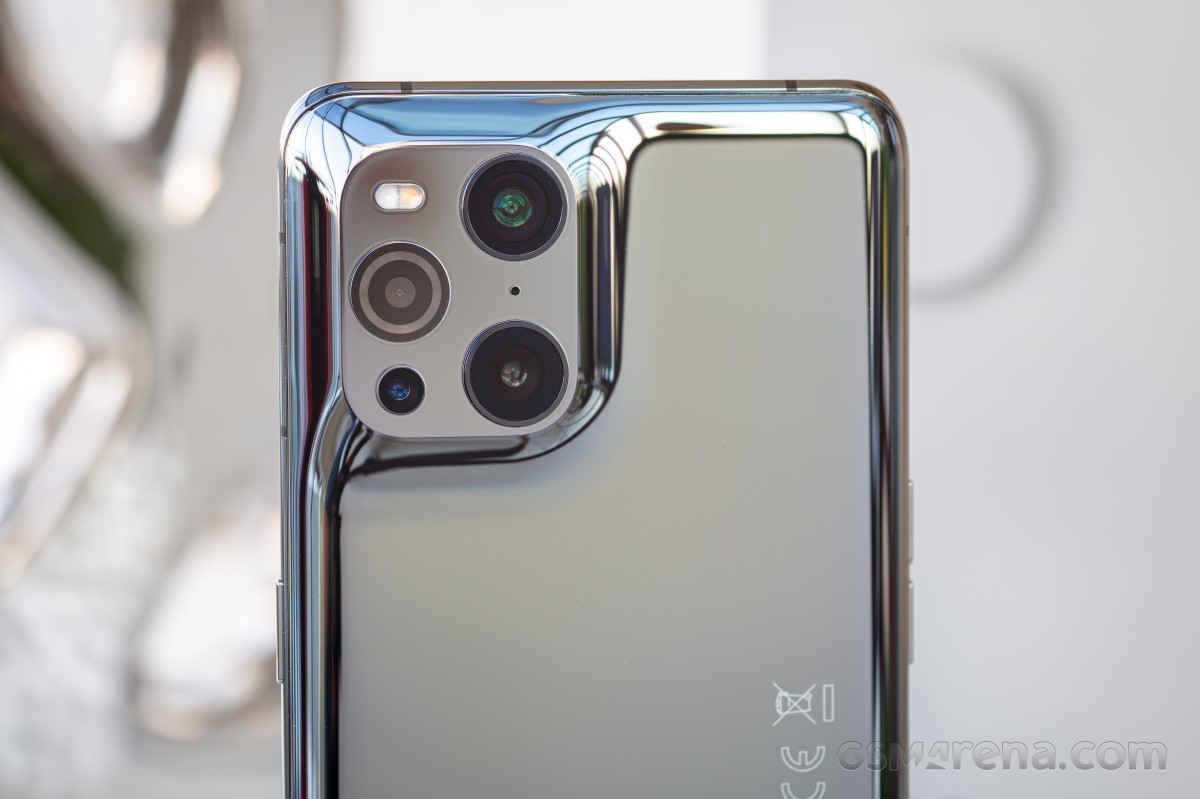
The primary camera uses a 50MP Sony IMX766 1/1.56" sensor with 1.0µm pixels and a Quad-Bayer RGGB filter. This sensor is paired with a 6-element 26mm lens that is stabilized and has an f/1.8 aperture.
On board, we also get all-pixel omnidirectional phase detection autofocus. This means there are a total of 8 autofocus detectors on each pixel, and the autofocus sensing has improved response to horizontal elements, whereas conventional dual pixel autofocus systems have a hard time with those and are more sensitive to vertical ones. This also means autofocusing should be pretty good in low-light.
The ultrawide-angle camera employs the same 50MP Sony IMX766 sensor with a QB filter and all-pixel omni-directional PDAF. Here, Oppo uses a 7-element 16mm-ish f/2.2 lens with freeform optics and anti-reflective coating. This new configuration should minimize chromatic abbreviation and barrel distortion. This camera supports macro photography from as close as 4cm. There is no OIS.
The telephoto camera uses an unknown 13MP sensor sitting behind f/2.4 52mm (or so) lens. PDAF autofocus is available, though there is no OIS. Oddly, the snapper saves the photos in 12MP. It can do 5x hybrid zoom, whatever that means.
These three cameras support 10-bit color capture. If enabled, the phone will save the photos in 10-bit HEIF format, which is currently incompatible with most devices but the Find X3 itself. They also support 10-bit HDR video capture if you'd like to shoot HDR clips.
We appreciate the 10-bit color push, and one day we would get to the moment where everything will recognize and display 10-bit color media, but we are still far away from this day. In fact, while we could shoot 10-bit photos, there is no easy way to show them to you. They do look indistinguishable from the default images when looked at the phone's screen, though.
The last camera is something we haven't seen on a smartphone until this Find X3 Pro. It's a 3MP f/3.0 snapper with 1:1 aspect, and it shoots microscope-like photos with an autofocus system working between 1mm and 3mm distances and optics that offer up to 60x magnification. It has an always-on ring-LED flash as the phone will always cast shadow over the subjects from such close shooting distances. It sounds intriguing - shooting things the naked eye cannot see, but this sounds even more obscure than the macro imagers.
Let's not forget the front camera - it's a 32MP f/2.4 Quad-Bayer shooter with fixed focus. It saves photos in 32MP - Oppo's chosen not to offer the native 8MP mode.
Camera app
The Find X2 Pro's camera app is similar to what you'd find on other Oppos. You can change modes with swipes to the side, but you can't flick up or down to switch to selfies - there's a toggle for that. There are more modes, including Microscope, than the ones listed, and those can be found in the 'More' tab. There is no way to rearrange the modes or add or remove ones.
There are numerous ways to operate the zoom controls. Tapping on the current zoom level cycles between them all - 0.6x-1x-2x-5x. Tap and slide in either direction, and you get a zoom wheel that offers 0.1x steps and can get you all the way to 20x. Alternatively, you can tap on the dots for direct access to the respective magnifications. Pinch to zoom works too.
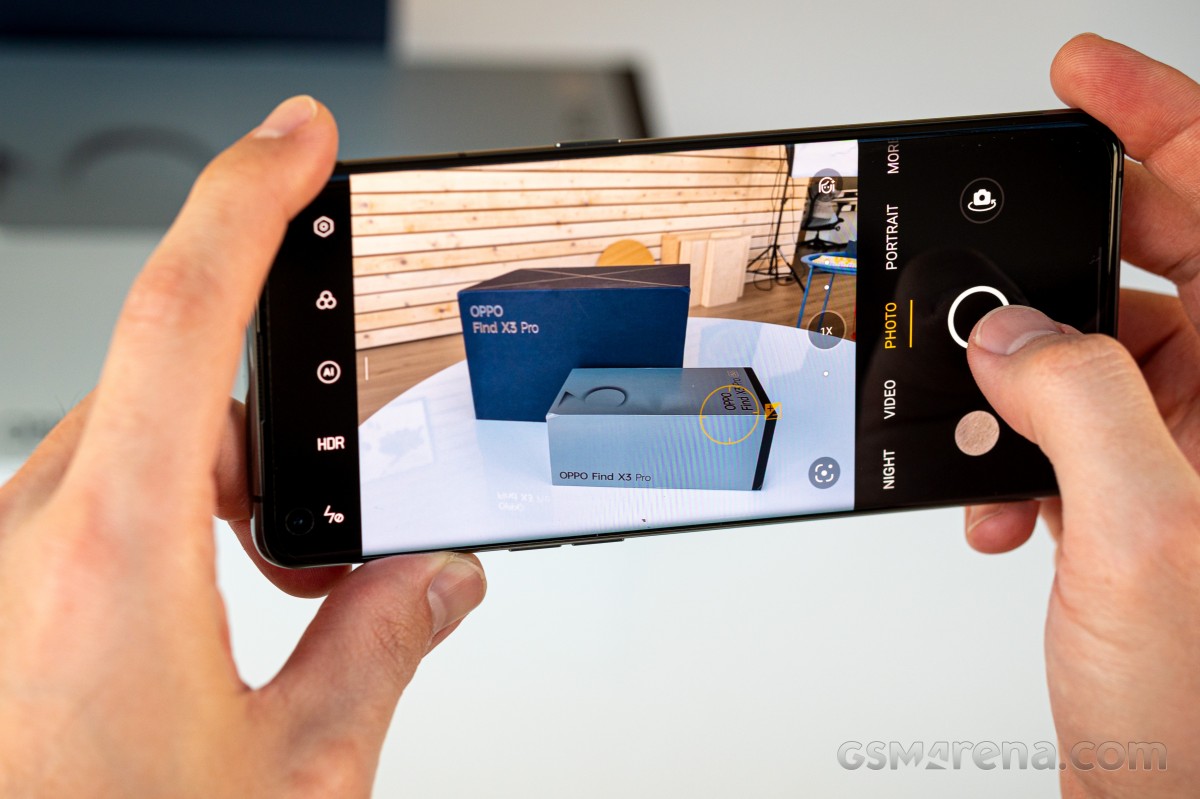
Note that if you're at 1x and try to focus on a subject closer than about 12cm, it'll switch to the ultrawide-angle cam - and in this instance, it'll display a 'Macro mode' bubble in the viewfinder.
The Pro/Expert mode that can be found under the 'More' gives you more photographic control. You get to tweak exposure (ISO in the 100-6400 range and shutter speed in the 1/8000s-32s range), white balance (by light temperature, but no presets), manual focus (in arbitrary 0 to 1 units with 0 being close focus and 1 being infinity) and exposure compensation (-2EV to +2EV in 1/6EV increments).
You do get to shoot on all but the micro cam in this Expert mode, but switching them is handled in a bizarre way. You get the familiar 1x-2x-5x selector, but that doesn't operate the actual cameras - it's digital zoom from whichever camera you've picked from the tree selector on the opposite end of the viewfinder. Indeed, the trees switch cameras, and once you select a module from there, no focusing distance considerations will auto-switch it - that's good.

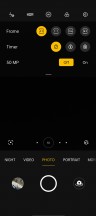

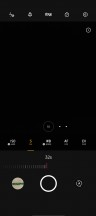
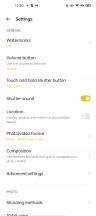
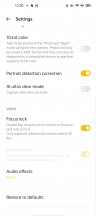
Camera UI
The high-res cameras also support shooting in the widespread RAW and the new RAW+ format, which captures HDR information and should allow even more room for fine-tuning in post processing.
Photo quality
The two 50MP cameras save 12.5MP photos by default (4,096 x 3,072 px). Oppo is promising color consistency across the two snappers - a thing Apple does on its iPhones. You can also opt for a 50MP mode on either of the shooters, if it matters to you.
The main camera captures outstanding photos. The resolved detail is abundant, there is no noticeable noise, the colors - absolutely accurate and true to life, and the dynamic range is rather high, but not overboard.
The foliage is well developed, something we don't see every day, and the processing is careful with the sharpening levels across the grass, trees, roads, cars. Still, there is visible over-sharpening on buildings, fences, and sometimes - even people - so it's not as perfect as we'd hoped for.
Most of the time, the photos had a very natural look with balanced processing, and we consider these images as being among the best the current flagships can offer.
























Main camera, 12.5MP
The ultrawide camera saves exceptional 12.5MP photos with the same color accuracy as the images coming from the primary shooter. The ultrawide pictures excel in detail, noise handling, contrast and dynamic range, and are once again natural-looking and very well balanced. Here, the sharpening is tuned even better, read it's not excessive but just the right amount, and we can't find a single fault with these snaps.
The new lens configuration does indeed reduce chromatic abbreviation and the barrel distortion, just as promised.
























Ultrawide camera, 12.5MP
The ultrawide camera features autofocus, and it can also do close-up photos. Provided you get the distance right, you'll end up with a great photo of excellent quality.








Ultrawide camera - macro mode, 12.5MP
The main and ultrawide cameras can theoretically shoot in 50MP, but it's not worth it. There is no smart upscaling or AI high-res thing going on; it's merely a resize from 12.5MP to 50MP, and it doesn't look that good.




Main camera, 50MP



Ultrawide camera, 50MP
The telephoto camera offers 2x optical magnification, and this may disappoint those expecting 5x or more, as was the case with the Find X2 Pro. Well, according to Oppo, they did their homework and found out people rarely used the 5x camera as it was a bit of an overkill for their purposes. And we kind of agree with that, but we still think a 3x camera with OIS - as a middle ground - would have been better.
Well, it is what it is, and the 13MP snapper on the Find X3 Pro won't disappoint, at least not in broad daylight. It also tries to match the colors from the other two cameras, but it's a bit hit-and-miss, although not by much.
Other than that, the 12MP photos (it seems some cropping is involved) are superb - the detail is plenty, the contrast high, the dynamic range and exposure - balanced. There are traces of noise in the shadows, but it doesn't get in the way.
The sharpening is the same as on the main camera - it is done right on foliage, clouds, stones, but it may go overboard in facades, buildings, fences. The over-sharpening isn't ruining the quality - we've seen many flagships keep this level at all times, but it could be tuned a bit better, that's it.




















Telephoto camera (2x zoom), 12MP
This camera also offers something called 5x hybrid zoom, though Oppo hasn't said why it's called hybrid. Maybe some information from the 50MP camera goes in these images, maybe not.
Anyway, they aren't bad, but they do look like simple crop and upscale from the 2x telephoto snaps.
















Telephoto camera (5x zoom), 12MP
The microscope camera works from about 1mm up to 3mm distance, it has its own flash, and you don't have to worry about lighting your subject. It indeed saves details invisible to the naked eye, things no other phone can capture so far. The quality is surprisingly good, too, but your subject needs to be flat, and you need a steady hand.
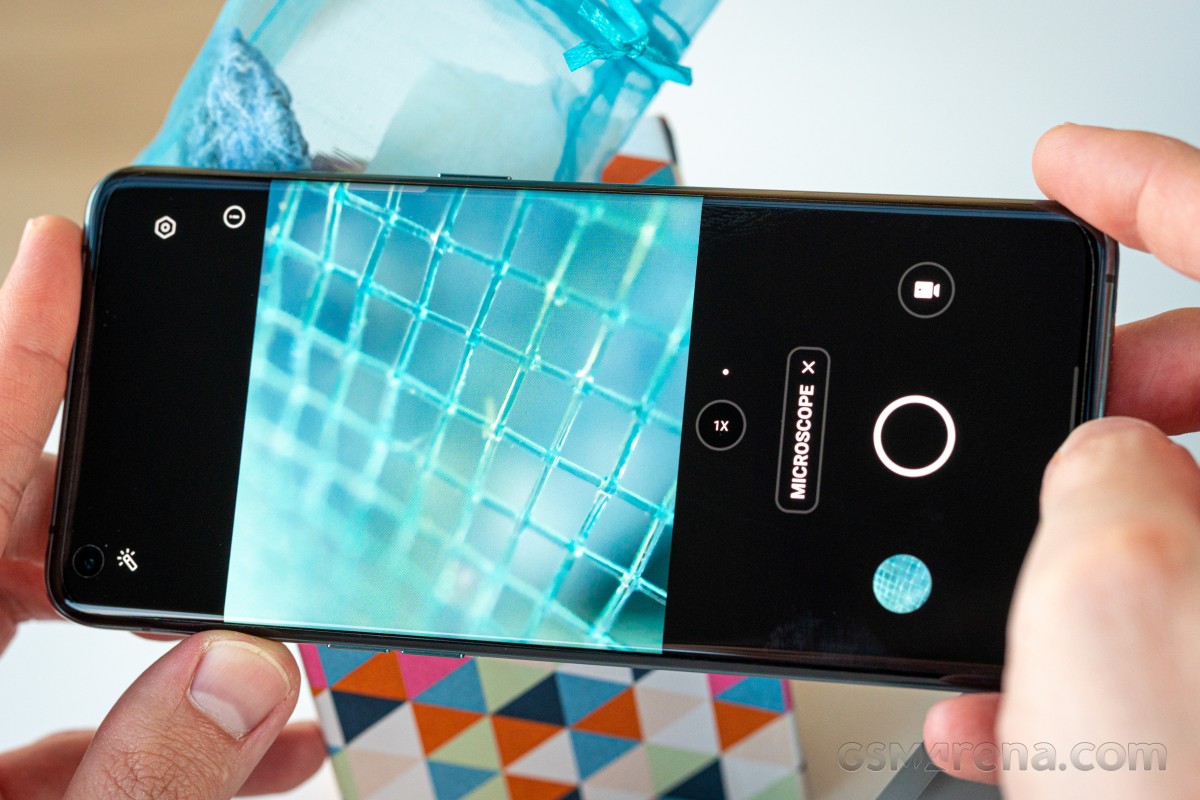
The photos offer a lot of detail and well-saturated color - something that's often not the case with the macro cameras. We liked what we got, and these pictures would make for lovely Instagram posts for sure. This camera isn't for shooting bugs or flowers; it's for seeing much further within those bugs' wings or flower stamens. You can shoot tiny fibers, snowflakes, banknotes' protection, etc.
This shooter seems like a gimmick, sure, but one we actually like, and if you are keen on such unique photos, you'll like it, too.














Microscope camera, 3MP
The best way to describe the low-light photos from the main camera is this - it captures exactly what your eyes are seeing. The resolved detail is high, the noise is incredibly low, and the photo corresponds perfectly to the scene as far as exposure, color saturation, and shadows are concerned.










Main camera, 12.5MP
While the Find X3 Pro adequality tunes the parameters to match the reality, sometimes this isn't enough. Here comes the Night Mode to rescue. It takes about 2-3 seconds, and it does brighten the whole picture but just the right amount - it won't make it look like it's daytime. The Night Mode offers more balanced exposure, restores blown highlights, and exposes more detail in the shadows, but not to an unnatural-looking extent.
Whatever you choose - regular or night modes, you won't be disappointed.










Main camera - Night Mode, 12.5MP
Here is an ultrawide-angle camera that isn't just usable at night, but one you shouldn't miss using come nightfall. While it doesn't offer OIS and has a darker f/2.2 aperture, it still captures lovely images in low-light conditions. There is plenty of detail, the color saturation is true to the scene, and while some noise remains visible, it doesn't really get in the way.
Overall, these are among the best ultrawide night photos we've seen, and that's before Night Mode comes into play.










Ultrawide camera, 12.5MP
The Night Mode on the ultrawide camera smears a bit of fine detail but eliminates the noise. It brightens the whole picture, restores clipped highlights and exposes a lot of detail in the shadows. Overall, it is as good as the primary camera, it just offers a bit less detail.










Ultrawide camera - Night Mode, 12.5MP
The telephoto camera is rarely used at night - the app mostly resorts to digital zoom over the main camera, no matter if it's a regular photo or Night Mode. On the rare occasions the zoom camera triggers, you'd get a detailed but noisy photo.
Night Mode can work on this camera, too, but once again, it's extremely rare. The last photo below was taken with Night Mode.




Telephoto camera, 12MP
Finally, there is the Tripod Night Mode, which you can activate once you are in the regular Night Mode. It uses longer exposure times - between 10s and 45s - and obviously, requires a steady phone. It snaps an amazing picture, clean, bright, with excellent detail, exposure, and color saturation. It's great for cityscapes, seafronts, and similar scenes with various lights.
The tripod night mode works on all three cameras.



Tripod Night Mode Main camera • Tripod Night Ultrawide • Tripod Night Telephoto
And here are photos of our usual posters taken with the Oppo Find X3 Pro. Here's how it stacks up against the competition. Feel free to browse around and pit it against other phones from our extensive database.


Oppo Find X3 Pro against the Galaxy S21 Ultra 5G and the Find X2 Pro in our Photo compare tool
Portraits
The Oppo Find X3 Pro can shoot portraits with its primary and telephoto cameras.
The portraits shot on the main camera are impressive - the subject separation is remarkable, and the blur is genuinely nice. The detail on the persons is remarkable, the colors are accurate, and the dynamic range is noteworthy.






Main camera portraits, 12.5MP
The zoom camera can also do close-up portraits, but it needs ideal light conditions; otherwise you'll get soft and noisy photos. And if the light is right, you'd get equally impressive portraits like the one from the main camera.




Telephoto camera portraits, 12.5MP
Selfies
The Find X3 Pro has a 32MP selfie camera, and its sensor has a Quad-Bayer color filter. But just like most makers do, Oppo also saves 32MP photos instead of the native 8MP ones. So, you can't expect pristine detail and sharpness.
The 32MP images are indeed quite good as far as colors, contrast and dynamic range are concerned. The detail is slightly above average, just as expected. Those are some excellent shots, especially when downsized, and we can't imagine someone using them in their full 32MP resolution.




Selfies, 32MP
You can also do selfie portraits, and they exhibit proficient separation and likable blur. The quality is a match for the regular selfies.



Portrait selfies, 32MP
Video capturing
The Oppo Find X3 Pro can do 4K at 60fps on the primary and ultrawide snappers. The telephoto camera will max out at 4K at 30fps. The micro cam supports 1080p@30fps capturing, but we can't really imagine what you are going to shoot with it.
There is no 8K option on the Find X3 Pro, though we can't really say we are missing it.
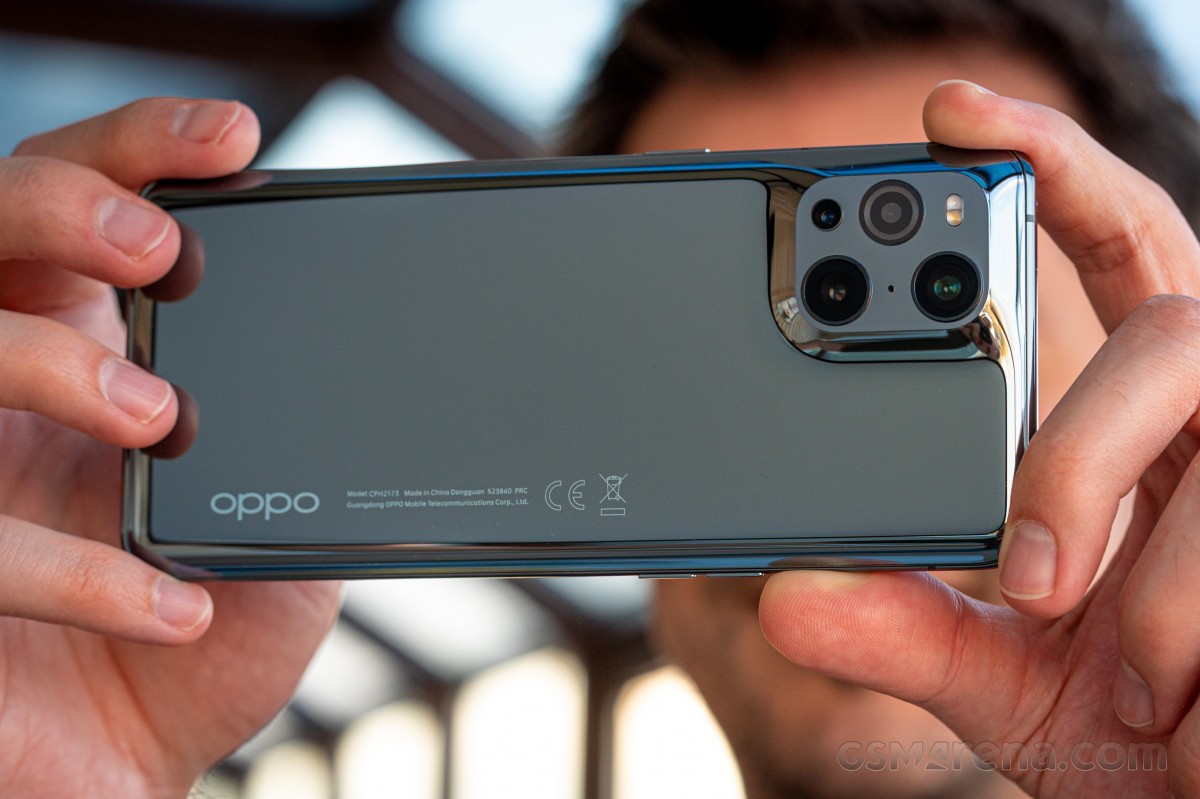
All cameras feature always-on electronic stabilization, while the main camera also benefits from additional optical stabilization. Super Steady action camera-like mode is available, if you need that (it crops a lot from the ultrawide or the main camera).
Finally, audio is always captured stereo with about 290Kbps bitrate. The mics are doing a wonderful job, and the quality is great with rich sound and deep bass, if needed.
Let's talk quality now.
The main camera captures magnificent 4K videos at both 30fps and 60fps frame rates. The resolved detail is great, the sharpening is just the right amount, and the videos look very natural. The colors always stay true to life, the dynamic range is high but not to extremes, and the contrast is superb. These are among the best videos you can shoot on a phone, and let's not forget EIS is always involved.
The ultrawide camera, quite expectedly, has the same outstanding video quality as the main one. The footage, no matter 30fps or 60fps, is always rich in detail, with low noise levels, excellent colors, contrast, and well-handled dynamic.
The telephoto camera shoots nice 2x zoomed videos. The detail is a bit lower if compared to the other cameras, but good, nevertheless. The noise is low enough. The colors are sometimes a bit warmer than they should be, but you can notice this only if you compare it to videos from the other cameras. Other than that - contrast, colors, dynamic range - are all commendable.
You can also shoot 5x digitally zoomed videos with the tele camera. They aren't that bad, but they are lacking in detail big time. Maybe if you lower the resolution down to 1080p, you may get satisfying results.
The low-light videos from the main camera at 4K@30fps are really good. Just like the still images, the clips show the scene as is - rich in detail, with low noise, and true to reality exposure and color saturation.
Using the AI Highlight Video option helps if you want to boost the brightness and the color saturation, but those are shot at 1080p resolution. This mode does exactly what it promises - a minor boost in exposure and the colors, especially those coming from light sources, but nothing that may look unnatural or over-processed. We can imagine using this in busy city streets at night.
The ultrawide camera captures a bit noisier 4K@30fps videos at night. They do retain good colors, and the gentle noise reduction helps for some good detail levels, but the noise hikes around the corners. They are very much usable but stellar they are not.
AI Highlight Video option is available on the ultrawide camera, too, and it saves a tiny bit better 1080p video. There is a minor boost in both shadows and well-lit areas, and some colors pop a bit more. But that's about it. Once again, it could be quite good when used in busier cityscapes or streets.
Finally, the zoom camera can also offer usable 4K at 30fps at night, though the AI option is not available. Those are extremely noisy, poor in detail, and the colors are washed-out. Better use the main camera, we guess.
And here is the Oppo Find X3 Pro in our video sample database where you can compare it directly to all other phones we've reviewed.


2160p: Oppo Find X3 Pro against the Galaxy S21 Ultra 5G and the Find X2 Pro in our Video compare tool
The competition
The Find X3 Pro seems like a meaningful upgrade over the X2 Pro, even if it doesn't look as major as some might have hoped. We can see a point there - after all, the 6.7" AMOLED is great, but the old one wasn't shabby either. The jump to the next-gen Snapdragon is great, but it doesn't bring breath-taking performance benefits.
But, the camera, on the other hand, has seen a lot of improvements, including new high-end sensors and this unique 3MP microscope snapper. The larger battery and the fast wireless charging complete the list of the major upgrades.
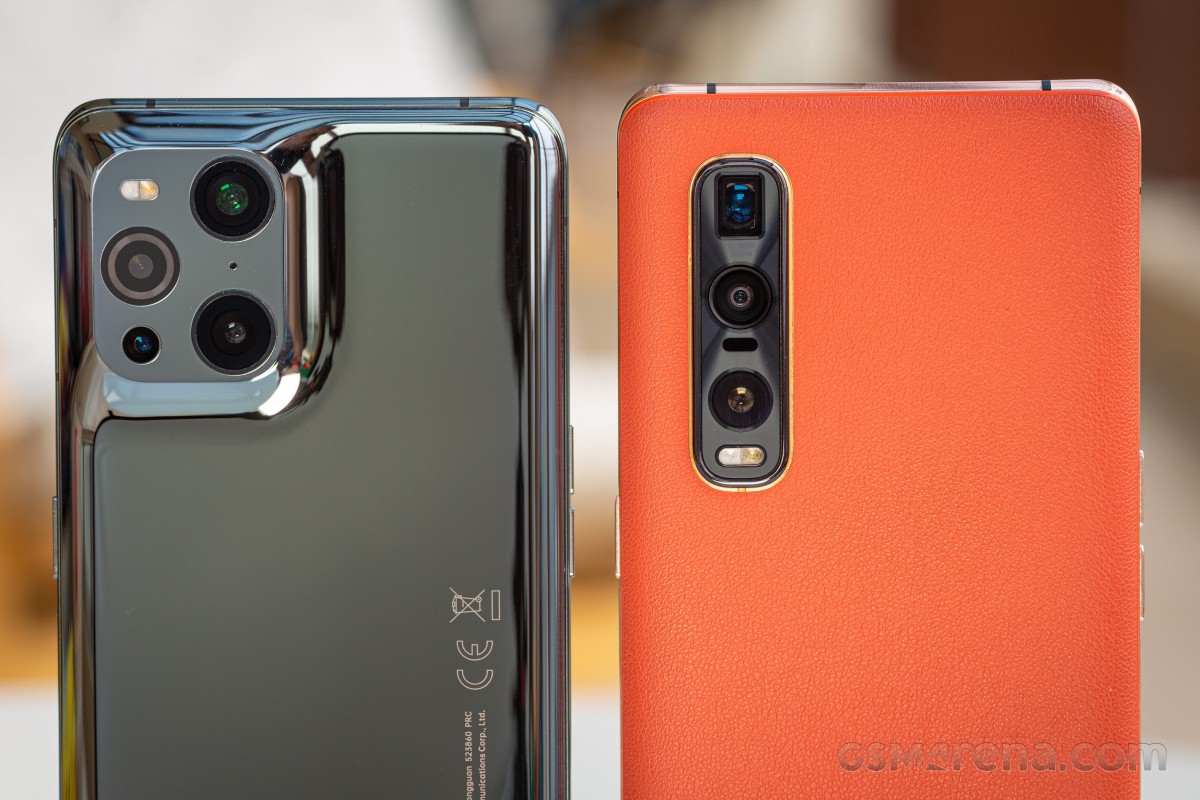 Find X3 Pro and Find X2 Pro
Oppo will be selling the Find X3 Pro globally with an international warranty not unlike Apple's. Purchasing it won't be as easy as opening, say, Amazon, and clicking Buy, as not all countries will have a regional seller. But we do hope Oppo will be able to expand its market reach even more with the Find X3 Pro. And while we are on the topic of availability, for now, only the Find X3 Pro will be available outside China, and you won't see the other Find X3 options as alternatives in this section.

So, the first phone that comes to mind as a viable alternative to this €1150 Find X3 Pro is the €750 Xiaomi Mi 11, which we reviewed just recently. The Mi 11 matches the screen and the chipset of the Oppo, as well as the speaker quality, the battery capacity, and the charging speed. It runs on MIUI, which is a lot more popular and gets regular updates for years. But there is no zoom camera on the Mi 11, no micro snapper, and no official water-protection. It makes up for those deficiencies with a price tag that's some €400 cheaper than the Find X3 Pro, and we can easily forgive the missing zoom in and zoom out cameras.
The Galaxy S21 Ultra costs as much as the Find X3 Pro, and while it has a similar screen, chipset, and speakers, it impresses with zooming capabilities. The Ultra features a 3x and a 10x telephoto camera, both with OIS. Its 40MP selfies camera with PDAF and 4K capturing is superior, too. Finally, the Galaxy has much better battery life, and unless you need the microscopic camera, the Ultra might be your better choice.
Huawei P40 Pro costs only €640, and it is quite the treat if you can live without Google services and stereo speakers. The water-resistant P40 Pro packs a great 1200p 90Hz AMOLED, a powerful Kirin 990 5G chip. Still, its camera prowess is what makes it such an attractive offer - all four snappers - the 50MP main, the 40MP ultrawide, the 12MP 5x tele, and the 32MP AF selfie excel in photo and video quality. Zooming across these cameras while shooting video is quite smooth, too.
Finally, we want to mention the upcoming vivo X60 Pro+, which might be a niche smartphone, but what a phone it is. The X60 Pro+ is expected to cost the same as the Oppo on the international markets, and it will match its screen, processor, main camera, and battery specs. But the vivo will offer a more versatile imaging setup by accompanying the 50MP primary with a 48MP ultrawide shooter with a second-generation gimbal stabilization and two zoom cameras - 32MP 2x portrait one and 8MP 5x OIS telephoto. That's something we'd like to try for sure.
Finally, the OnePlus 9 series announcement is just around the corner, and the Pro model should be a close match to the Find X3 Pro. The OnePlus phones enjoy a wider availability, they run the fan-favorite Oxygen OS, and they are usually more reasonably priced, so they may be worth looking into.




Xiaomi Mi 11 • Samsung Galaxy S21 Ultra 5G • Huawei P40 Pro • vivo X60 Pro+
The verdict
We liked the Oppo Find X3 Pro and the time we spent together. It has a marvelous screen and design, powerful hardware, and a multi-camera setup that delivers on every promise. The fast battery charging is something many will appreciate, too.
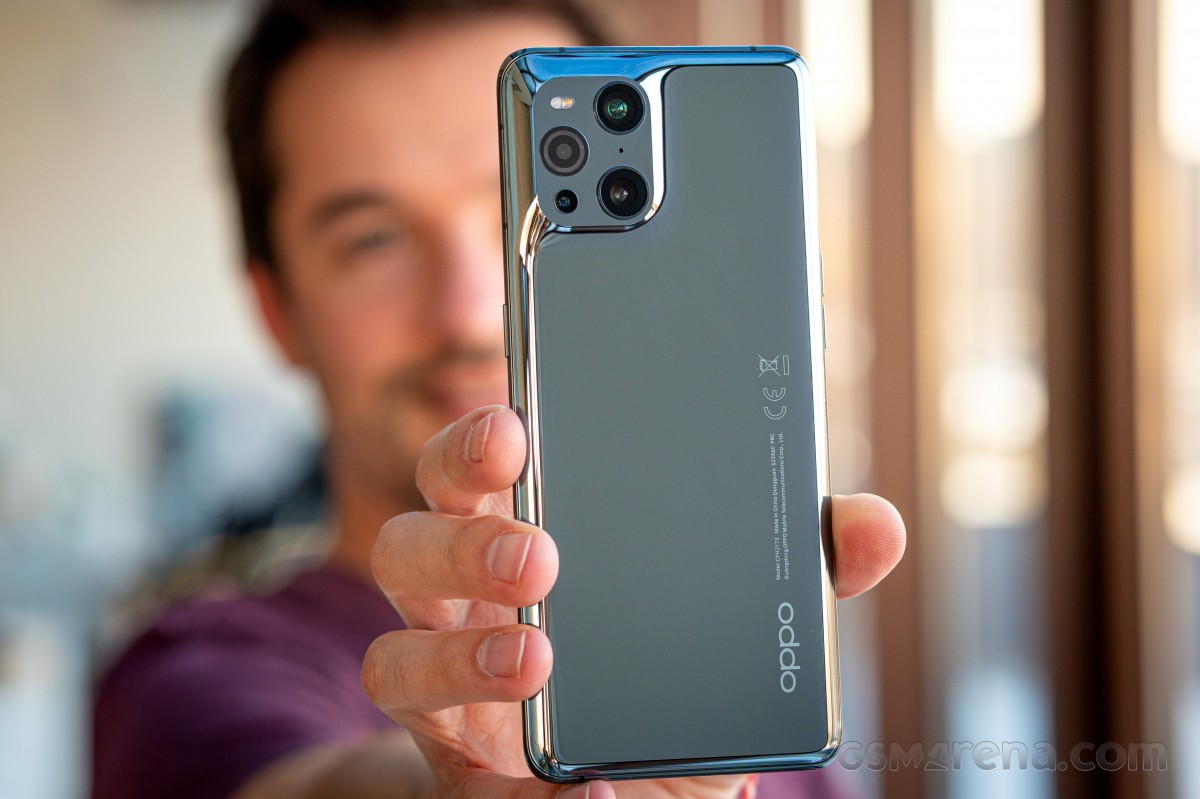
The Find X3 Pro is not without competition; in fact, it's an all-out war. And while the Find X3 Pro delivers on its promises, it's not a perfect phone either. The Mi 11 is cheaper, the Galaxy - heavier but better spec'd, the P40 Pro - quite attractive but Google-less, while the vivo X60 Pro+ and the OnePlus 9 are yet to hit the shelves.
But that's the great thing about the market and the rich competition - you are free to buy the phone that suits you best.
Pros
- Remarkable 1440p OLED HDR10+ display with 120Hz refresh.
- Exquisite, water-resistant design.
- Fast wired and wireless charging.
- Loud stereo speakers, equally balanced./li>
- Flagship-grade performance, 5G.
- Outstanding photo and video quality, day and night.
- Intriguing one of a kind microscope camera, gimmick or not.
- Fluid ColorOS on top of Android 11, rich customization options.
Cons
- Battery life could have been better.
- The telephoto camera needs OIS.
- The selfie camera is long overdue for an upgrade.
- Limited market availability.

No comments:
Post a Comment